
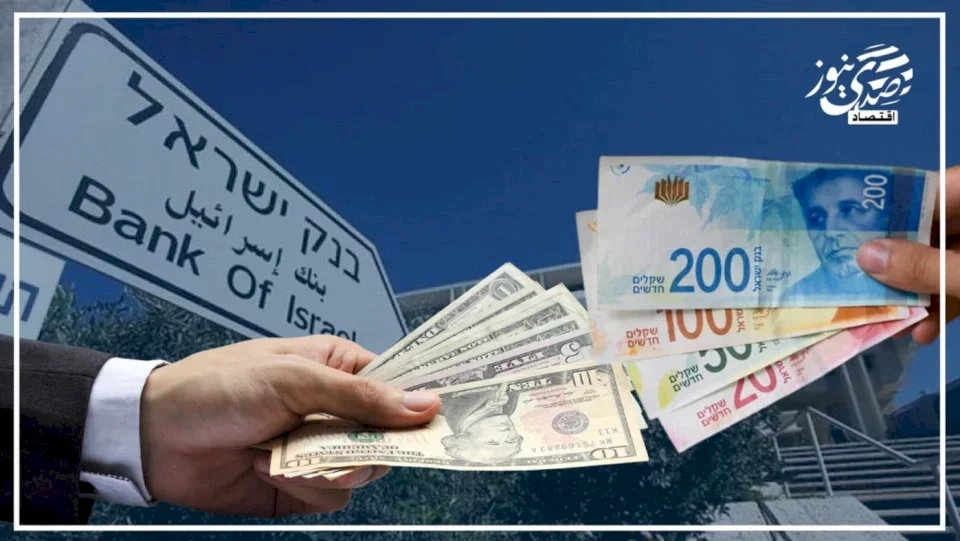
Why has the shekel returned to decline? And what are the expectations in the event of a strike on Iran?
Exclusive to SadaNews - After the shekel reached its highest exchange rates against the dollar in 30 years, recording an exchange rate of 3.068 shekels, a level not seen since November 1995, the Israeli currency has returned to decline, with the exchange rate reaching 3.13 against the dollar. Today, Sunday, the exchange rate was recorded at 3.12, showing a slight decrease.
Regarding the shekel's return to decline against the dollar, banking and financial expert Dr. Mohammed Salama explains to "SadaNews" that these reasons include increasing geopolitical tensions in the region, as well as limited declines in global stock price indices, and the growing likelihood of the Israeli central bank lowering interest rates on the shekel in its meeting tomorrow, Monday, pointing out that 80% of analysts expect a rate cut.
He added: "However, the decline of the shekel that has occurred and the increased likelihood of a war may prompt a reconsideration of the cut and its postponement to better conditions."
As for the last reason, Salama states that it is related to the improvement in dollar exchange rates generally following the announcement of the last meeting minutes of the U.S. Federal Reserve. Ten out of twelve members voted to keep interest rates unchanged, noting that the details of the Federal Reserve minutes showed that it is committed to its independence and that raising rates has not been ruled out as an option if inflation rises again in the American economy, especially after the improvement in U.S. labor market indicators.
He added: "Some point out that the internal political situation and the prospects of difficulty in approving the budget by the end of March contributed to weakening the shekel, even if this is not apparent."
Finally, financial indicators such as the current account, foreign currency reserves, and a budget deficit below 70% of GDP support the shekel, as do economic indicators such as an unemployment rate of 3%, inflation at 1.8%, and growth rates of 3.1% for the previous year, indicating expectations of better performance this year that support further strength of the shekel in the medium and long term.
He stated: "The result of the war will decisively determine the direction of the dollar against the shekel, so any significant rise that may occur should be taken advantage of, as it may be temporary; weakening Iran means more strength for the shekel, but prolonging the war and causing great harm to Israel's future could lead to a significant rise in dollar exchange rates that may reach 3.80 shekels per dollar, should the damage be severe."
It is noteworthy that since the beginning of this year, the dollar has declined by about 2%, losing about 10% of its value against the shekel over the past three years. Compared to the highest level recorded in October 2023, at the outbreak of the war on Gaza (4.05 shekels per dollar), this represents a cumulative decline of about 23%, according to Globes.
 Follow the latest Sada News via Google News
Report: More than 100 Arrests in the West Bank Since the Beginning of Ramadan

Injuries from Gunfire, Airstrikes, Artillery Shelling, and Demolition Operations in Gaza S...

Citizens repel settler attack in Mukhmas north of Jerusalem

Dar Al-Iftaa: The Amount of Zakat al-Fitr for This Year is 10 Shekels

Why has the shekel returned to decline? And what are the expectations in the event of a st...

Somaliland: We Offered the United States to Exploit Our Minerals and Establish Military Ba...

The Muslim World League Condemns Huckabee's Statements as 'False'
