

Report: Deepening Military and Security Cooperation Between Turkey and Saudi Arabia Concerns Israel
SadaNews translation - The Hebrew website Maariv reported that the improvement of relations between Washington and Ankara, alongside deepening military and security cooperation between Turkey and Saudi Arabia - with American support - raises significant concerns in Israel.
It added, according to the SadaNews translation, "In parallel with expanding its influence in Syria and strengthening its security relations with Iraq, Jordan, and Lebanon, Ankara seeks to join a security agreement similar to NATO, signed between Saudi Arabia and nuclear-armed Pakistan, in September 2025."
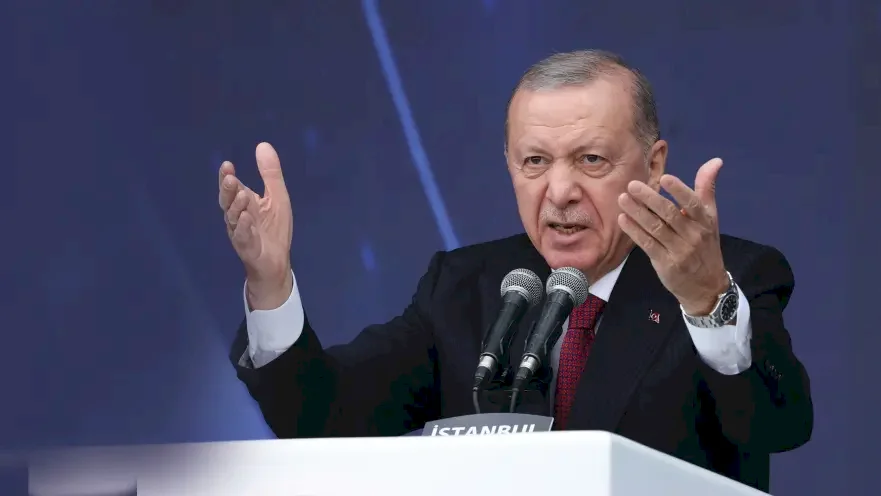
It affirmed that these movements are not coincidental but are part of a realistic and pragmatic policy led by President Recep Tayyip Erdoğan, who seeks to form new regional alliances, wherein Turkey plays a pivotal role linking the Middle East, North Africa, and the Red Sea, coordinated closely with Riyadh and supported by flexible American backing.
The site emphasized, according to the SadaNews translation, that strengthening relations with the Trump administration, which includes, among other things, American investments estimated between $3 to $5 billion in energy, security, and advanced technology sectors, alongside Ankara's gradual rapprochement with Arab and Islamic countries, and establishing its relations with Saudi Arabia, the UAE, Qatar, Pakistan, and Egypt, opens a wide space for it to enhance its security, military, economic, and religious ideological influence.
Turkey is currently active in several conflict zones simultaneously, from the Middle East and Africa to the Balkans, Central Asia, and the Caucasus, including Nagorno-Karabakh, solidifying its position as a multi-armed regional power that is strong and effective. Meanwhile, a new Turkish-Sunni axis is forming, operating parallel to the anti-Israeli Islamic block led by Qatar, Ankara, and the Muslim Brotherhood, gradually diminishing Israel's maneuvering margin on core issues: Iran, Gaza, Syria, and regional energy security arrangements.
This axis significantly enhances Turkey's geopolitical position by prioritizing security, stability, and regional development at the expense of bolstering democratic values, placing Israel in front of a new, complex, dynamic, and much more challenging strategic reality than what it has experienced in recent decades.
Strategic Trends
In this context, three main strategic axes - reducing direct American intervention in Syria and the Middle East in general, transferring security responsibility in the Gaza Strip to effective international entities, and the gradual collapse of Iran - serve as an impetus to enhance Turkey's deterrent capability towards Israel. President Erdoğan believes that Turkey, as a NATO member with the second-largest army in the alliance, as well as its operational experience, advanced technologies, and thriving defense industry, fits perfectly with the emerging strategic alliance between Saudi Arabia and Pakistan, which is seen as a tool to achieve its ambitions for dominance in the Middle East and beyond.
Simultaneously, Turkey's candidacy for EU membership and the BRICS Forum, along with strengthening its relations with Russia and China - which is reflected, among other things, in the growth of trade from $6.7 billion in 2002 to $101 billion in 2024 - indicates a clear trend towards distancing itself from Western allies and reducing reliance on them.
These moves are part of a strategic and expansive foreign policy framework aimed at a shift towards a multipolar world, where new regional power centers compete, driven by utilitarian interests rather than historical loyalties, and even cooperate at times. One prominent example is the conflicts over influence between Saudi Arabia and the UAE in Yemen.
Strengthening Relations Between Ankara and Riyadh
From a broader strategic perspective, strengthening relations between Turkey and Saudi Arabia is a key driver for Turkey's moderately recovering economic growth and for realizing Crown Prince Mohammed bin Salman's Vision 2030. Despite, and perhaps because of, the difficult economic situation Turkey faces, which includes the continued depreciation of its currency, an unemployment rate rising to 8.6%, inflation around 25%, and a shortage of raw materials and energy, Ankara is optimizing its relationship with Riyadh to expand industrial security cooperation, increase trade volume (which reached $7.9 billion in 2025), and accelerate economic integration between the two countries. This combination of security, economy, and technology grants the Turkish-Saudi axis strategic depth and flexibility, enabling it to exert lasting regional influence, which poses a direct challenge to Israel, especially in its pursuit of leading the energy and economic axis and seeking to become the preferred security and technological partner in the Gulf region.
Transferring advanced Turkish technologies to Riyadh, in exchange for Saudi investments in infrastructure projects in renewable energy, critical minerals, and green mining, strengthens the connection between the two parties.
At the same time, massive deals for purchasing drones, tanks, and ships worth billions of dollars are making Saudi Arabia the main market for Turkey's defense exports.
These steps contribute to diversifying Ankara's foreign currency sources, reducing dependence on Western or Qatari capital, and deepening bilateral technological exchanges, while enhancing Turkey's position as a preferred defense supplier to its Western partners (with trade volume with the EU reaching $168.3 billion in 2025) and on the Russian stage.
Implications for Israel
Turkey's deepening relations with Saudi Arabia, Qatar, and other Gulf Emirates, including its investments in developing gas infrastructure via Syria, reinforce the "Turkish corridor" model - a route for gas, electricity, and goods linking the Gulf to Europe. Projects like the Qatari-Turkish gas pipeline through Syria, and the connection to the "Arab Gas Pipeline," can provide Europe with a direct, cheaper, and shorter alternative to routes through Israel, Greece, and Cyprus, undermining partnerships that Israel has built with these countries, as well as with Jordan and Egypt, overshadowing its status as a regional energy and transit hub.
Moreover, if Riyadh prefers to invest in infrastructure that passes through Turkey and Syria over projects reliant on Israel, this could harm Tel Aviv's strategic standing against Europe and Gulf countries, weaken the development potential of the IMEC project, and undermine the geo-economic achievements of the Abraham Accords.
As Saudi investments in Turkey and its associated trade routes continue to increase, the risk of directing Saudi capital into regional frameworks where Israel is not a partner will rise, reducing the opportunity to build deep security and technological cooperation with Riyadh.
In the medium to long term, the Turkish-Saudi partnership could hinder the entry of certain Israeli defense industry products into Islamic markets in Asia and Africa. It may deprive Israel of direct access to Saudi capital and growth centers in new value chains in clean energy, logistics, and advanced technology, fields where Turkey is striving to establish its position as a key player.
The Strategic Opportunity
In light of these trends and scenarios, the main challenge facing Israel is to "read the geopolitical map correctly," reassess its course, and adopt a proactive and flexible strategic approach. It must deepen its partnerships with Greece and Cyprus, consolidating its axis with them as a stable pillar in the Mediterranean that complements the Turkish corridor and as a reliable alternative for strategic investors in Europe and the United States.
At the same time, there is a need to expand and diversify trade and energy corridors - with Egypt and Jordan, in the Red Sea region, and in land and maritime links with India and Africa - to enhance the national resilience capacity and reduce exposure to geopolitical risks.
On the strategic security front, the consolidation of the Turkish-Saudi relationship, especially given the instability in Syria and rising tensions in Iran, requires a conceptual update of the Israeli economic-energy axis: an intelligent mix that combines maintaining military operational freedom while building a comprehensive regional system for infrastructure, technology, and energy security, wherein Israel occupies the position of an indispensable vital partner.
Strengthening the Turkish-Saudi axis could act as an impetus to accelerate alternative regional integration and deepen relations with the Abraham Accords partnership - including pragmatic actors in Central and South Asia, such as Kazakhstan and Azerbaijan - and might even open the door for renewing energy relations with Turkey within a multilateral, balanced, and integrative framework with Arab and Gulf countries.
In the chaotic reality and emerging multipolar world, with Israel enjoying a clear advantage in technological innovation, intelligence, military capabilities, and sophisticated economic diplomacy coordinated with Washington, it can, and must, turn the crisis into an opportunity: not only to avoid being dragged into President Erdoğan's antisemitic statements and provocative moves but to actively participate in shaping a new regional geo-economic system, where Israel does not only respond to the rules of the game, but also dictates them.
 Follow the latest Sada News via Google News
Report: Trump Holds Pressure Cards and Signals Use to Coerce Netanyahu

4 Martyrs in Occupation Shelling on Gaza City and Khan Younis

Netanyahu Decides to Ceasefire in Lebanon, Hezbollah Rejects Israel's "Freedom of Movement...

Talks between Tehran and Washington on Sunday in Switzerland and an Iranian warning of the...

Jordan Condemns Occupation's Seizure of Land Belonging to the Greek Orthodox Patriarchate...

Iranian Foreign Ministry Officially Announces: Our Delegation Will Head to Switzerland

Revolutionary Guard Announces Closure of Strait of Hormuz.. Threatens More
