

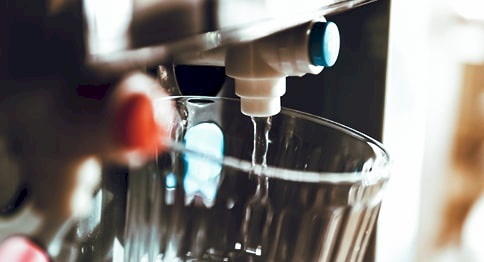
Important Warning: Hidden Health Risk in Common Water Dispensers
SadaNews - A recent study has warned that widely used water coolers and dispensers in offices and public places may create a fertile environment for bacteria to thrive, despite the belief that they are safer than tap water.
Researchers from Loma Linda University in California conducted a meta-analysis of data from 70 studies conducted over the past two decades in five countries, including the United States and the United Kingdom, and found that water dispensers often contain bacterial levels exceeding those found in the tap water sources they supply.
The researchers analyzed bacterial contamination in different types of water dispensers, whether they were directly connected to the tap water supply or operated using large water bottles.
The results indicated that the surfaces of these devices may become contaminated with biofilms, a protective slimy layer produced by microorganisms, allowing bacteria to survive and multiply within the water tanks, pipes, and dispensing nozzles.
The study showed that bacterial contamination is not limited to water coolers alone but extends to vending machines for soft drinks, where bacterial growth was recorded just a few days after some machines were sanitized.
Among the bacteria detected were fecal coliforms, which are bacteria associated with human and animal waste, and can increase the risk of gastrointestinal diseases such as nausea and vomiting, with rare cases being fatal.
Dr. Ryan Sinclair, an environmental microbiologist and study co-author, explained that the water filtration process in these devices removes residual chlorine, creating a suitable environment for bacteria growth, emphasizing the need for regular cleaning of pipes and changing of filters.
Unlike tap water, which usually contains small amounts of chlorine that kill microbes, water coolers and dispensers may allow water to pass without disinfectants, enabling bacteria to multiply, especially on the humid surfaces of nozzles and dispensing outlets.
Experts warned that neglecting to clean devices or regularly replace filters could transform these filters into a fertile environment for bacteria to thrive, instead of serving their intended protective role.
Researchers pointed out that the goal of the study is to raise awareness of the potential health risks associated with water dispensers and coolers and to call for adherence to regular maintenance and cleaning procedures.
Led by Dr. Thomas Heil, a water quality expert at Crafton Hills College in California, the research team recommended cleaning water dispensing devices every two to four weeks, or weekly in cases of heavy use.
The study was published in AIMS Microbiology.
Source: Daily Mail
 Follow the latest Sada News via Google News
FIFA Referees Committee, Led by Colina, Clarifies Cases from Egypt vs. Argentina Match

The Egyptian Federation Files Official Complaint Against Referee Letexier

Do You Know How to Comfort Someone Who is Crying? Here's What to Say and Do in Tough Momen...

"Backrooms": From Digital Legend to Cinematic Phenomenon

Prediabetes.. The Silent Bomb Carried by Millions Without Their Knowledge

From Sweden 1958 to the Epic of Egypt 2026.. Argentina's History with World Cup Comebacks

After the South Africa Precedent.. Nigeria Investigates the Encroachment of Technology Com...
