

Stalled Negotiations Over Hasakah in Syria.. Iraqi Threats Near the Border
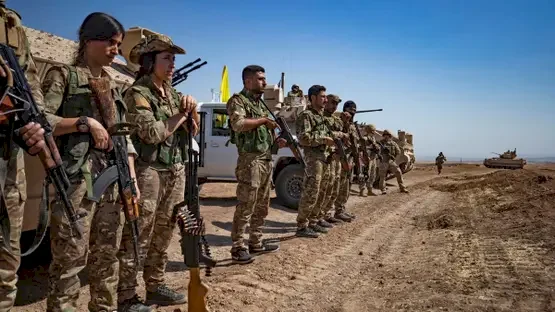
SadaNews - Syrian President Ahmad al-Shara presented the leader of the SDF, Mazloum Abdi, on Monday, a proposal that includes the entry of Syrian security forces into the city of Hasakah, along with offering the position of Deputy Minister of Defense and nominating a governor for the city, on the condition of neutralizing the Kurdistan Workers' Party (PKK).
The negotiations lasted five hours, but Abdi insisted on keeping the city under the full administration of the SDF and requested a five-day extension for consultation, which al-Shara refused, giving him a deadline until the end of Tuesday while hinting at a military solution and informing the international community of withdrawing from the negotiations.
This was accompanied by mutual accusations between the two parties. The spokesperson for the Syrian Interior Ministry, Nour al-Din al-Baba, confirmed that the SDF suffers from internal divisions and plays with the region's security after its military and security failures, while Fawza Yusuf, a member of the negotiation body for the SDF, pointed out that the government lacks the political will to cease fire, and she denied the presence of elements of the PKK among SDF fighters.
In response, Abdi called on what he described as his "youth in Syria, neighboring countries, and Europe" to join the ranks of the resistance following his meeting with al-Shara.
This comes after the Syrian president signed a ceasefire agreement with the SDF on Sunday and the integration of its elements into the government. Among the most notable terms of the 14-point agreement is the merging of the administration responsible for prisoners and ISIS camps, and the forces assigned to protect them with the Syrian government to assume complete legal and security responsibility.
This agreement follows a military operation by the Syrian army during which it regained vast areas in the east and northeast of the country, after accusing the SDF of breaching a previous agreement made 10 months ago and its failure to implement its terms, while the al-Shara administration is making intensive efforts to control security and exert control over the entire Syrian geography since the overthrow of Bashar al-Assad's regime in December 2024.
Iraqi Threats on the Border
For his part, Iraqi Interior Minister Abdul Amir al-Shamari warned that any approach by ISIS elements towards the Iraqi-Syrian border would be met with gunfire. This comes after accusations against the Syrian government that the SDF released elements of ISIS who were held in al-Shaddadi prison along the border, before later announcing the re-arrest of 81 of them.
Al-Shamari clarified that Iraq monitors the situation daily, and pointed to fortifications along the border, including a trench extending 620 kilometers and thermal cameras operating day and night, with full deployment of armed military sectors, confirming that security efforts are supported by army aviation and air force, and the borders are fully secured.
Syria Announces Arrest of 81 ISIS Elements After Their Escape from al-Shaddadi Prison
Syrian authorities announced early Tuesday the arrest of 81 ISIS elements who escaped from al-Shaddadi prison in southern Hasakah province, amid clashes between the army and a group linked to the SDF in the cotton prison in Raqqa city in the north of the country.
The Syrian Interior Ministry stated that around 120 elements escaped from the prison, prompting army units and special units from the ministry to enter the city of al-Shaddadi and its vicinity to pursue the escapees. The statement confirmed ongoing efforts to capture the remaining fleeing elements.
The Syrian army's operations command accused the SDF of releasing ISIS fighters from the prison, noting that the army immediately began operations to secure the area and arrest the escapees.
In contrast, the government considered what it described as attempts at security blackmail regarding terrorism as a political attempt to exploit the prison issue for the benefit of the SDF agenda, reaffirming its commitment to securing all detention centers and ensuring that no elements of the detained ISIS escape, holding the SDF responsible for any security violations in these prisons.
For its part, the SDF claimed that the prison was attacked by the army and lost control, while media reports, including the Kurdish Rudaw website, mentioned that about 1500 ISIS elements managed to escape from al-Shaddadi prison.
 Follow the latest Sada News via Google News
Jordanian Army Intercepts 4 Iranian Missiles and 4 Drones

Death of a Moroccan Man During His Arrest in Italy Sparks Calls for Investigation

Due to Trump's Sanctions.. Canada Cancels Joint Ceremony with the US for Bridge Opening

Trump: We will make great progress with Beirut.. Aoun: It is time for Lebanon to be stable

The Lebanese Army Deploys in the South and Comes Under Gunfire; Israel Clarifies

Bezhkian: Directives from the Leader to End the State of No War, No Peace

Meeting Between Aoun and Trump Expected Alongside 'Experimental Areas'
