

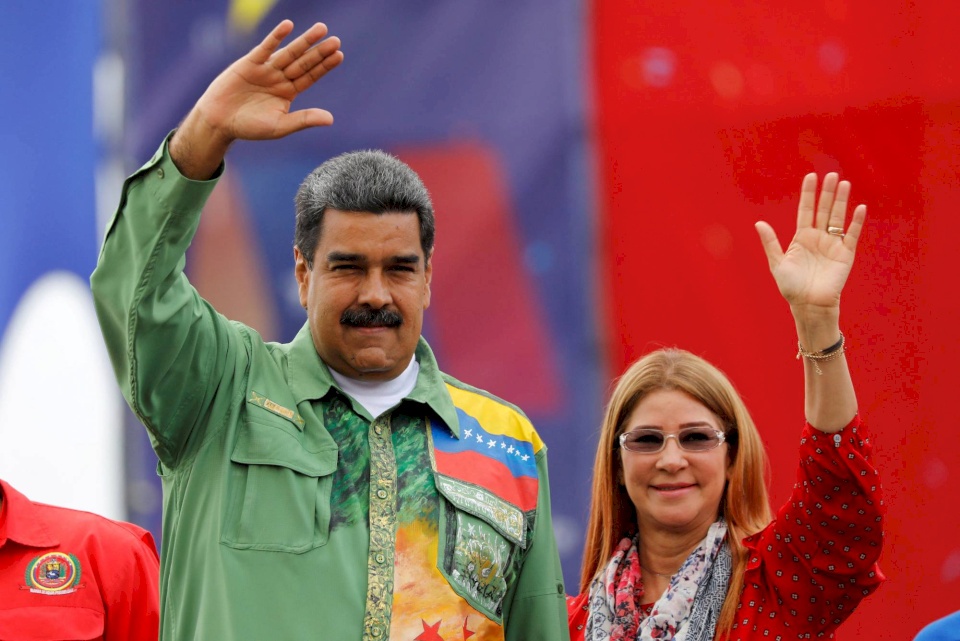
From Bus Driver to Controversial President of Venezuela... What We Know About Maduro
SadaNews - After more than a decade in power during which Nicolas Maduro faced numerous crises, US President Donald Trump announced today, Saturday, the arrest of Maduro and his wife, and their deportation from Venezuela.
So who is Maduro, the Venezuelan president who rose from a bus driver to the political heir of Hugo Chavez and whom Trump accuses of mismanagement and involvement in drug-related activities?
Humble Beginnings
Born on November 23, 1962, in the capital Caracas to a working-class family, Maduro grew up in a leftist political environment before entering political life.
Maduro worked as a bus driver and transport worker and emerged as a union organizer in the Bus Drivers' Union, which marked the starting point of his political career, as reported by "Britannica."
Entering the Political World
Maduro began his political career as a union representative in the late 1990s, then was elected as a member of the National Assembly in 2000 following a legislative overhaul.
In 2005, he briefly became the President of the National Assembly before being appointed as foreign minister in 2006, a position that strengthened his relationships within the United Socialist Party of Venezuela.
During this period, Maduro was a prominent voice in supporting the Bolivarian Alliance for the Peoples of Our America (ALBA), a regional alliance aimed at reducing US influence.
Maduro as Chavez's "Political Heir"
When the late Venezuelan President Hugo Chavez began to face health deterioration in 2011, Maduro's influence within the regime grew, until he was appointed Vice President in October 2012.
Before Chavez's death in March 2013, Maduro was announced as the head of the Transitional Authority in case of Chavez's death, and indeed Maduro won the special presidential elections in April 2013 to succeed Chavez.
Internal Tensions and Economic Crisis
Since coming to power, Maduro has faced severe economic crises, including skyrocketing inflation, shortages of basic goods, and a decline in the value of the national currency, prompting millions of Venezuelans to emigrate.
This was accompanied by widespread protests against his government and repeated accusations of state violence and repression of dissent. According to multiple reports and analyses, this crisis remains one of the worst in Latin America in recent years, according to the "Financial Times."
Drugs and the "Sun Cartel"
Maduro won a third presidential term in January 2025, following elections whose results raised widespread doubts about their legitimacy, due to opposition allegations of vote rigging and international criticism, according to "Reuters. "
The conflict between Maduro and the United States is a central theme in his foreign policy. Trump administration officials say Maduro leads what is known as the "Sun Cartel" for the flow of drugs into the United States, and Washington accuses Maduro of involvement in drug trafficking and corruption, raising the reward for information leading to his arrest to unprecedented levels for a head of state.
The "Cartel de Los Solis" (Sun Cartel) is a term that emerged in the early 1990s to refer to a network of corruption and drug trafficking, which is alleged to involve officers in the National Guard and the Venezuelan army, with the name referring to the sun insignia on the generals' uniforms.
US Sanctions... and Alliances
Washington has also imposed economic sanctions on Venezuelan oil companies and their affiliated tankers as part of a broader pressure campaign aimed at reducing oil revenues that allow the regime to persist.
According to the Trump administration, these measures are viewed as part of a wider campaign to punish Maduro's regime and stop what it describes as "alleged support for drug cartel activities."
In the face of Western pressures, the "Guardian" reported that Maduro has strengthened his country's relations with Russia, China, and Iran, relying on multiple alliances to mitigate international isolation and strengthen his position on the global stage.
The Divisive Maduro
According to the "Financial Times," Maduro is viewed differently at home and abroad; his supporters see him as a continuation of Chavez's Bolivarian project, defending national sovereignty against foreign dominance, while his opponents see him as a symbol of "populist tyranny," responsible for the economic crisis and political closure.
 Follow the latest Sada News via Google News
High-level sources reveal to SadaNews: Washington seeks to hold a Gaza Reconstruction Conf...

Will the election of Khalil al-Hayya change Hamas's approach and path?!

Iraqji Reveals Details of the Attack on the Iranian Supreme Leader's Headquarters

صراع على إرث خامنئي وسط غياب مجتبى.. والمتشددون يتهمون قادة إيران بـ«الانقلاب»

The European Union Reiterates Its Call for Israel to Refrain from Expanding Settlements in...

"Mamdani Berlin".. The German Left Bets on a Politician of Turkish Descent to Lead the Cap...

Hebrew Channel: Kushner Pushing to Enhance Communication Between the United States and the...
