

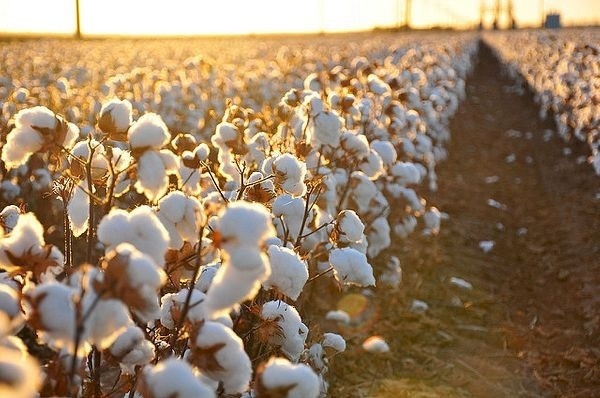
How Uzbekistan's Cotton Contributes to Russian War Ammunition Production?
SadaNews - Perhaps the Russian war machine has found in Uzbekistan its unexpected source for a critical component in ammunition production: cotton linters, as the production capacity of a new factory there far exceeds local demand.
As the war in Ukraine approaches its fifth year, the United States and its Western allies have intensified their efforts to prevent Russia from obtaining the materials necessary for its defense industry. This includes cotton, which is needed for the production of nitrocellulose - a core component in propellant materials used in everything from small arms ammunition to heavy artillery shells.
Russia's defense needs and the insistence of Western nations to deprive it of these resources have brought cotton cellulose to the forefront of the geopolitical struggle in Central Asia. This situation was clearly manifested last month when President Donald Trump sought to assert U.S. interests by hosting Central Asian leaders at the White House to discuss trade and critical minerals.
This year, Chinese President Xi Jinping, Russian President Vladimir Putin, and the European Union held summits with the five Central Asian states amid a growing game of influence in this mineral-rich and energy-rich region. To ensure the continued operation of ammunition factories, Moscow needs a steady supply of nitrocellulose, which has been difficult for Russia to produce since the start of the full-scale invasion in February 2022.
Uzbekistan is one of the largest cotton producers in the world, and it has close ties with Russia. The two sides signed a five-year military strategic partnership program in January, although the Tashkent government has avoided announcing its support for Putin's war in Ukraine.
A Factory Owned by a Sanctioned Russian
While the West intensifies sanctions pressure on the Kremlin, Uzbekistan has built a new cotton linter factory, which could expand the flow of this material to Russia. The majority of the factory's shares, until June, were owned by a company previously controlled by Rustam Mominov, who was sanctioned by the EU in October for supplying Russian defense industries with cotton cellulose.
The EU, which bans the export of cellulose to Russian defense industries, identified Mominov as a British, Uzbek, and Russian citizen. On December 18, the UK imposed sanctions on Mominov for allegedly providing "economic resources or goods or technology" that could destabilize Ukraine, and listed him as an Israeli, Russian, and Uzbek citizen, omitting his British identity.
According to trade data, Mominov and his close partners controlled over 80% of Uzbek cotton linter exports to Russia in 2023 and into the spring of 2024. Mominov's company, "Alliance Capital KS Spolka," invested $28.5 million in the new production facility "Chemistry International" in Navoi, southeast of the Uzbek capital. (Mominov transferred the ownership of "Alliance Capital," which is based in Warsaw, shortly before sanctions were imposed on him.)
The company owned 74% of the shares of "Chemistry International," while "Navoiyazot," Uzbekistan's largest state chemical plant, controlled 26%, according to an archived version of the company's investment site dated February 18, 2025.
Shokhat Guraev, the commercial director of "Chemistry International," stated in a phone interview that the company has not yet started production, denying any sales to Russia. He explained that the new factory has only begun to produce small quantities of hydroxypropyl methylcellulose, derived from cotton linters, used for civilian purposes in the Uzbek market. The production capacity of the new Uzbek plant is 10,000 tons of cotton linters per year.
British Sanctions
The UK imposed sanctions on "Chemistry International" last December for allegedly providing "economic resources or goods or technology" that could destabilize Ukraine. No one responded to calls and emails sent to the virtual office of "Alliance" in Warsaw.
According to customs data collected by "Trade Data Monitor," Uzbekistan supplied Russia with about 6,900 tons of raw cotton linters - a type of cotton used to produce nitrocellulose - during the twelve months ending in April 2024.
However, in the spring of 2024, Uzbekistan's exports of cotton linters to Russia sharply declined. At the same time, its exports of another type of cotton - cotton used for padding - increased by 76% to reach 20,952 tons for the year ending in April 2025. The EU has imposed restrictions on exporting cotton linters to Russia since 2022, with additional measures taken in 2023. Some analysts believe that the sudden rise in shipments of another type of cotton indicates that Russia is likely still importing cotton linters through intermediaries or hidden under the guise of another product.
Gary Somerville, a senior analyst at the Open Source Center in London and a former researcher at the Royal United Services Institute who studied the supply chain of Russian defense industries, stated: "Given the critical importance of artillery to the Russian army in Ukraine, it is likely that Russia is still importing cotton linters, and the importation is done covertly, either by not reporting the shipments or registering them under a different product description code."
The Russian Ministries of Foreign Affairs and Defense did not respond to requests for comment.
When the EU imposed sanctions on Mominov, it noted that he used his chemical plant "Farg'ona Kimyo Zavodi" in Uzbekistan to supply U.S.-blacklisted Russian powder factories with cotton linters. In December, the UK also imposed sanctions on "Farg'ona."
There was no response to calls and emails directed to "Farg'ona" to request to speak with Mominov.
Export data shows that "Chemistry International" shipped small quantities of hydroxypropyl methylcellulose to Russia earlier this year, and began selling cotton linters to various countries. The company exported about 600 tons of cotton linters, mostly to Turkey, between May and November 2025, according to a Bloomberg analysis of data collected by "Big Trade Data" based in Beijing. Guraev did not respond to subsequent calls and text messages seeking comment.
A Versatile Commodity
Cotton linters are a dual-use commodity, making it difficult to impose restrictions on shipments intended for Russian military production. In addition to being used in propellant materials in defense industries, they are also used in the production of civil products such as cellophane, certain types of plastics, and some medical materials - uses that are not subject to sanctions.
Samuel Craney-Evans, a defense affairs analyst and research fellow at the Royal United Services Institute, stated: "Russia needs a reliable supply of cotton linters - everything that comes out of the barrel needs it... Establishing a factory in Uzbekistan, which falls within Russia's geopolitical scope, would provide a reliable and cost-effective supply."
In May, Ukraine imposed sanctions on Mominov and his chemical plant "Farg'ona," as well as another company called "Raw Materials Cellulose," which a 2024 report from the Royal United Services Institute noted seemed to be under Mominov's control through interlinked beneficial owners.
The BBC and other media outlets revealed last year that they were suppliers of cotton cellulose to Russian powder factories, sometimes through intermediaries. In December, the UK imposed sanctions on "Raw Materials Cellulose."
In the spring of 2024, the companies "Farg'ona" and "Raw Materials Cellulose" stopped supplying Russia with cotton cellulose and began shipping cotton padding for the first time, according to "Big Trade Data." "Farg'ona" also began shipping cotton linters to the UAE in June 2025 for the first time, according to the data.
Transfer of Company Ownership
At the end of June, before the EU imposed sanctions on him, Mominov transferred his 50% share in "Alliance Capital" to Victoria Bonkovska, who now controls 70% of the company, according to Polish company records.
The BBC reported in 2024 that Bonkovska is likely Mominov's daughter, citing her birth date and her maiden name, which was "Mominova." Bonkovska did not respond to a request for comment via Facebook.
The EU sanctions list did not mention the new Uzbek factory or "Alliance Capital." Guraev, the commercial director of "Chemistry International," denied that Mominov is an investor in the company, but said he does not know the owner of "Alliance Capital." He clarified that the factory has been purchasing cotton linters to produce small quantities of hydroxypropyl methylcellulose used in construction, food, and cosmetics.
"Alliance" has had no revenues over the past three years and has recorded losses every year since 2022, according to Polish company data, raising questions about how it finances its investment in the new facility in Uzbekistan.
Its archived website, published earlier this year, listed offices for the company in Poland and Uzbekistan, stating that its business activities include chemical production, oil and gas industry, and highway construction, listing "Farg'ona" and "Chemistry International" among its assets.
"Chemistry International" is located at the site of the "Navoiyazot" factory. Uzbekistan received numerous shipments of cotton linter processing and testing equipment from a Chinese company in 2023, according to trade records.
According to a report published by Uzbek state media in June 2024, "Chemistry International" planned to export cellulose worth $15 million to Russia and Belarus without specifying whether it was for civilian or military use.
Decline of Kazakhstan's Exports amid Sanctions
While Uzbekistan remains a key supplier to Russia, trade records indicate that neighboring Kazakhstan has significantly reduced its exports of cotton cellulose to Russia since the United States imposed sanctions on many powder factories, according to a report from the Royal United Services Institute in 2024.
Trade records also show that Kazakhstan's exports of padding cotton to Russia increased in the spring of 2024, but remain minimal compared to the volume of Uzbekistan's shipments. The Uzbek Ministry of Commerce did not respond to a request for comment.
Craney-Evans stated: "There are many new factories around the world producing propellant, which increases pressure on this supply chain for both the West and others... Russia has exhausted its strategic stockpile of nitrocellulose, and is trying to rebuild supplies while waging its war with Ukraine and anticipating further confrontation with the West."
 Follow the latest Sada News via Google News
After Deschamps' Departure... Zinedine Zidane Tops the Candidates to Lead France

Mbappe Surpasses Messi and Becomes the All-Time Top Scorer in the World Cup

England Defeats France and Achieves Largest World Cup Achievement Since 1966

Messi Refused to Play for Spain and Missed 3 World Cups

Publishers Sue Google for Allegedly Using Books to Train Artificial Intelligence

Google Expands Capabilities of Google Search Console to Support Social Media Accounts

The Mediterranean Table... An Ancient Diet Revealing Its New Secrets for Health and Longev...
