
Minister of Labor: Formation of a Employment Council in the Gaza Strip Soon
SadaNews - Prime Minister Dr. Muhammad Mustafa affirmed the government's readiness in its plans to reconstruct the Gaza Strip, and ongoing discussions with national, regional, and international parties to achieve this, despite the difficulty of the task and the complex environment, and the determination led by President Mahmoud Abbas to take on responsibilities towards our people in the Gaza Strip.
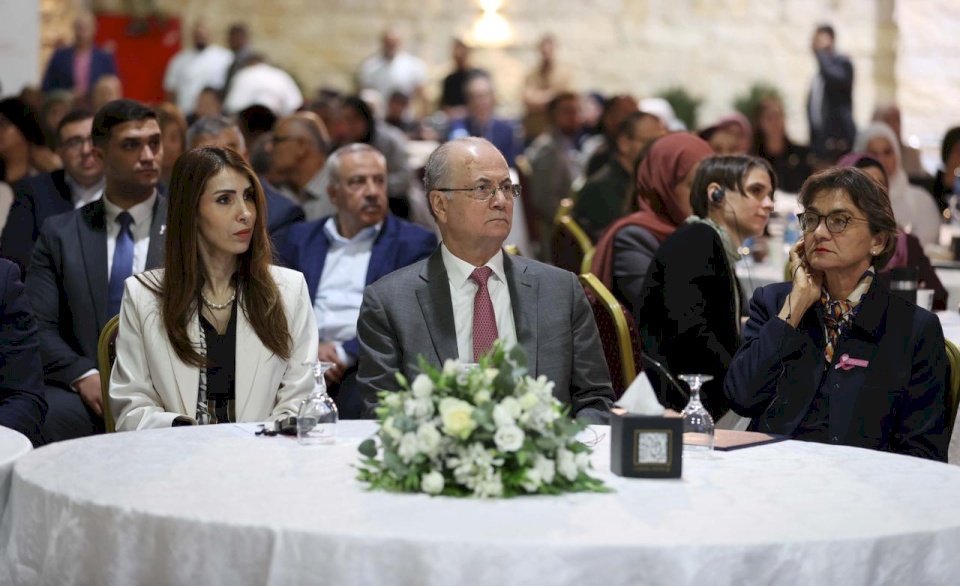
This came during his speech at a workshop to enhance the role of local employment and training councils in formulating local labor market strategies, and to promote cooperation and support for sustainable job opportunities in Palestine, attended by Minister of Labor Dr. Inas Al-A'tari, governors of the provinces, head of the Representative Office of the Federal Republic of Germany Anke Schlim, and representatives of governmental, civil, and private sector institutions, on Wednesday in Ramallah.
The Prime Minister conveyed greetings from President Mahmoud Abbas and appreciation for what is being provided for the service of our people, especially in these critical circumstances, addressing our resilient people that it has been our fate to be in this difficult position time and time again, but our strong and persevering people have proven each time that they are capable of overcoming it.
Mustafa said: "With God’s permission, we will move from the calamity of Gaza to an independent state with its capital in Jerusalem under the leadership of President Mahmoud Abbas, with the efforts of dedicated national institutions, and the New York Declaration and the recognition of 159 countries of us so far is a good indicator of progress on this path, as we want the state to be independent, free from wars, free from occupation and settlement, and hopefully free from unemployment."
The Prime Minister stressed that the difficult financial economic situation and high unemployment are primarily due to the occupation, and that the end of the occupation is fundamental for changing that, noting that the government will do what is necessary to relaunch the national economy, develop institutions, and enforce law and justice.
Mustafa conveyed a message to our people in the Gaza Strip that they will not be left alone in this ordeal, explaining that what is needed is more than a ceasefire, as it includes all aspects of life, and the guarantee begins with the full return of national legitimacy, for national civil and security institutions are capable of leading the recovery and rebuilding process and unifying the institutions and paving the way for the establishment of an independent state in Gaza, the West Bank, and Jerusalem.
The minister confirmed in her speech that the workshop comes as part of the Palestinian government's efforts to enhance coordination and dialogue between key partners in the labor market, and to discuss priorities and national policies aimed at developing the vocational and technical education system and promoting decent and sustainable employment, especially in the post-war stage on the Gaza Strip, particularly after laying the frameworks for the national employment strategy.
Al-A'tari valued the support of the German government and its active contribution to the development of the vocational and technical training sector, empowering Palestinian youth, and enhancing their competencies to promote economic and social development.
The minister pointed out that local employment and training councils are one of the essential pillars in the national employment system, as they act as coordinating and consultative platforms bringing together partners in the provinces to identify labor market needs and devise appropriate programs for implementation, confirming that these councils have contributed over the past years to the implementation of successful operational initiatives in partnership with local authorities, chambers of commerce, and civil society institutions, resulting in the creation of sustainable job opportunities and improving public services for citizens.
Regarding the Gaza Strip, Al-A'tari explained that the Ministry of Labor continues to implement its interventions and operational projects despite the difficult conditions, through employment support programs, empowering youth, and assisting workers and affected families, confirming that the ministry is working on forming an employment council in the Gaza Strip soon to enhance coordination and unify efforts in the fields of employment, and providing emergency programs that fit the difficult humanitarian and economic reality, contributing to the creation of sustainable job opportunities, empowering youth, and enhancing the resilience of citizens.
The minister also announced the signing of a memorandum of understanding with SOS Children's Villages Palestine, to provide financial grants for three months to 500 unemployed individuals in the Bethlehem and Hebron governorates, funded by the Hermann Gemainer Fund in Germany, indicating that the implementation of the grants will be through the employment councils in the two governorates under the supervision of the Ministry of Labor.
In the context of digital transformation, Al-A'tari revealed that the Ministry of Labor is currently preparing a national employment platform, in collaboration with the Belgian Development Agency (Enabel), with participation from local and international companies, explaining that the platform will officially launch next month under the auspices and presence of the Prime Minister.
It was clarified that the platform will represent a qualitative leap in managing the Palestinian labor market through intelligent networking powered by artificial intelligence between job seekers and employers, in addition to providing internal, external, and remote job opportunities, and supplying the government with accurate data to support employment policies.
For her part, Anke Schlim, head of the Representative Office of the Federal Republic of Germany, emphasized the importance of enhancing bilateral cooperation between Palestine and Germany in the fields of employment and vocational and technical training, especially following the devastation caused by the war, noting that recovery in the Gaza Strip requires the concerted efforts of the international community, mainly Germany and Europe in support of these efforts. There is work underway to prepare a conference to support the reconstruction of Gaza in cooperation with our partners in Palestine, emphasizing that investment in skills and strengthening partnerships is essential to creating sustainable job opportunities and achieving inclusive economic development.
She noted that the German government supported Palestine with around one billion euros in previous years, focusing on supporting entrepreneurship, water desalination and treatment stations, and supporting employment and training councils, due to their importance in enhancing the skills of the workforce in the labor market, stressing that Germany is one of the first countries to support the "Future Initiative" to provide job opportunities for youth and women, affirming its country’s commitment to enhancing cooperation with the Palestinian Ministry of Labor to support the Palestinian economy and promote decent job opportunities.
For his part, Dr. Hussein Hamayel, speaking on behalf of the President’s advisor for provincial affairs, highlighted the significant importance of employment and training councils in the provinces, considering them an effective tool in shaping local employment policies. He affirmed the necessity of enhancing integration between public sector institutions, the private sector, and civil society, in light of the scarcity of capabilities and resources, and the economic blockade, along with rallying international support for the labor sector. He pointed out the importance of providing vocational training institutes to encourage youth to engage in them and equip them with new skills to open job areas and meet labor market needs, ensuring sustainable economic and social development, and supporting the provinces' full capacity for these councils for what they represent as a fundamental pillar in reducing unemployment and economically empowering youth and women.
On her part, Ramallah and Al-Bireh Governor Dr. Laila Ghannam affirmed the vital role of employment and training councils in enhancing sustainable development, indicating that these councils form a bridge between the outputs of education and training and the needs of the labor market, contributing to empowering youth and women and opening new horizons for them in the labor market. She emphasized the importance of integrating efforts among official institutions, civil society, the private sector, and international partners through these councils, to ensure that training programs are directed towards the required specialties, thus enhancing job opportunities and reducing unemployment rates.
This workshop comes as part of the "Access to the Labor Market - Phase II (PALM II)" program, implemented by the German Agency for International Cooperation (GIZ) GmbH, commissioned by the German Federal Ministry for Economic Cooperation and Development (BMZ), aiming to support the national employment strategy by improving labor market services, enhancing institutional coordination, and empowering youth and women.
It also comes in light of the government's employment initiative that aims to develop the work environment and represents a response to the current unemployment crisis, taking a step towards building a flexible and inclusive labor market through investment in diverse sectors, targeting to create 8000 job opportunities and providing workers with necessary skills and opportunities to assist them in entering the labor market.
During the workshop, a session was held on the Ministry of Labor's interventions, where the reality of employment in Palestine was reviewed in light of the high unemployment rates of around 51% due to the repercussions of the Israeli aggression on the labor market, and the ministry's interventions through programs to address these challenges, such as rehabilitation and skill-building programs, short-term emergency response programs, and wage-subsidized employment programs.
A brief explanation was also provided about the reality of vocational training, where the Ministry of Labor supervises 14 government vocational training centers that contribute to providing counseling and vocational guidance services, implementing basic and short training courses, licensing private centers, and issuing vocational certificates. The number of graduates from government training centers in 2024 was about 3000 graduates, while the number of graduates from private centers was 4749 graduates.
In addition to presenting the Labor Market Information System Compass and its importance in updating job seekers' data, where currently more than half a million job seekers are registered, the Palestinian Labor Market Compass was also reviewed for its role in unifying donor efforts to allocate projects based on the needs of Palestinian provinces and marginalized areas and updating them periodically to shape policies that set programs tailored for each region.
Moreover, the role of the Ministry of Labor in fostering entrepreneurship as part of the labor system was highlighted, where the ministry works towards providing a supportive environment for entrepreneurial businesses and empowering entrepreneurs to establish modern entrepreneurial projects contributing to creating local and external job opportunities, as well as opening horizons for youth to work remotely.
 Follow the latest Sada News via Google News
Soaring Oil Prices Burn the Pockets of the Palestinian Citizen "The Poor"

Millions of Dollars in Losses.. "SadaNews" Reveals Shocking Figures for Traders from Pales...

The Problem of Shekel Overcrowding Worsens.. Fuel Station Owners Threatened with Closure o...

The Palestinian Economy at a Crossroads: 4 Files Awaiting Resolution

بنك إسرائيل يخفض توقعات النمو ويحذر من ارتفاع العجز

Exchange Rates of Currencies Against the Shekel on Tuesday (July 21)

Inflation Expectations in Israel Stabilize at 1.5%
