

15 Foods That May Keep Your Body Hydrated Besides Drinking Water
SadaNews - Getting enough water each day shouldn’t come solely from liquids. Eating hydrating foods can help you maintain your body’s water balance, which is essential for good health. You can increase the amount of water you consume daily through healthy and delicious options.
Cucumber
Cucumbers are made up of 96 percent water, and pickles are not far behind at 95 percent. Though they are not rich in nutrients, the water in cucumbers contributes to your daily hydration needs, according to "Verywell Health."
Lettuce
This well-known leafy vegetable is 95.6 percent water. Two cups of chopped lettuce contains 16 calories and 20 milligrams of calcium.
Celery
Celery consists of 95 percent water and is rich in fiber, which aids digestion. Its ease of use makes it an excellent snack option and can be added to salads such as pasta salad, coleslaw, or chicken salad.
Radish
Radishes are root vegetables with a peppery flavor, containing Vitamin C and fiber. They are made up of 95 percent water and can be used with carrots to prepare coleslaw.
Romaine Lettuce
Romaine lettuce is a type of lettuce with a mild taste and is 95 percent water. Despite their similar appearance, romaine differs from iceberg lettuce, being richer in nutrients. It is a source of Vitamin K, Vitamin C, folate, and fiber.
Zucchini
Zucchini, a type of summer squash, consists of 94.8 percent water. It offers a range of nutrients, including fiber, Vitamin A, manganese, and Vitamin C. Zucchini is low in calories, containing only 19 calories per cup.
Tomato
Tomatoes have a high water content of 94 percent. They contain a good amount of various nutrients, including potassium, Vitamin C, and folate (which is essential for fetal brain and spinal cord development during pregnancy). Tomatoes also contain antioxidants (which help prevent cell damage), including lycopene and beta-carotene.
Bell Pepper
Bell peppers are made up of 94 percent water and add a distinctive flavor to many dishes. They contain an abundant amount of fiber and are an excellent source of Vitamin C, as well as other vitamins and minerals, including Vitamins E and K, potassium, and folate.
Bell peppers can be red, orange, yellow, or green. Unripe bell peppers are green and have a slightly bitter taste.
Asparagus
Asparagus, which consists of 93 percent water, is the young shoots of a perennial plant. Its stalks are low in calories and healthy, containing 27 calories per cup when eaten raw, in addition to fiber, folate, and Vitamins K, C, and A. Asparagus is also rich in antioxidants.
Portobello Mushroom
Portobello mushrooms are 92 percent water. They are very low in fat and calories, with only 19 calories per raw and diced cup. Nutrients present include B vitamins, phosphorus, copper, and potassium.
It is the only plant-based source of Vitamin D, but only when grown under ultraviolet light, instead of being grown in a dark place.
Watermelon
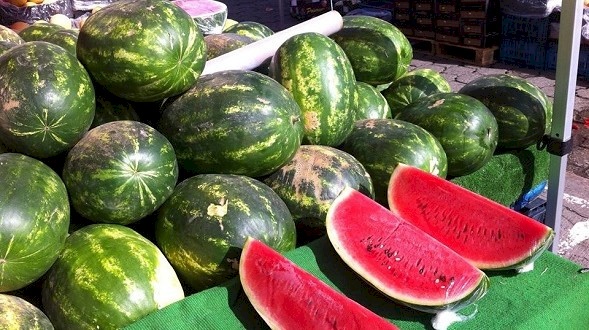
Watermelon is a delicious way to hydrate, containing 92 percent water. It is a good source of Vitamin C and numerous other antioxidants, including lycopene and carotenoids.
Spinach
Spinach consists of 92 percent water and is a nutrient-dense plant. It is high in fiber, promoting healthy digestion, as well as Vitamins A, C, K, folate, calcium, and iron.
Strawberries
Strawberries, which are 91 percent water, can make desserts special and help you meet your hydration goals.
Strawberries are a good source of Vitamin C, manganese, and fiber. They also contain antioxidants like anthocyanins, which are linked to heart health. They are rich in phenolic antioxidants, which may also protect against heart disease, as well as cancer and some inflammation.
Skim Milk
Skim milk (or fat-free milk) is made up of 91 percent water. It contains the same amount of calcium as whole milk, providing 23 percent of the recommended daily amount in one cup. It also contains phosphorus.
Broccoli
Broccoli, which is 90 percent water, is also nutrient-rich. It provides the body with Vitamins C and K, folate, iron, potassium, and fiber. Antioxidants found in broccoli include carotenoids and quercetin.
 Follow the latest Sada News via Google News
World Cup: Spain Advances to Semi-Finals with Late Victory over Belgium

Meta Prepares to Produce Custom AI Chip to Double Its Computing Power

Portable Ultrasound Device Supports Early Detection of Breast Cancer

15 Foods That May Keep Your Body Hydrated Besides Drinking Water

What Happens to the Kidneys When You Consume Energy Drinks Daily?

Ear Acupuncture for Relieving Migraine Pain

Sunscreen... What is the appropriate amount? And how to choose the best product?
