

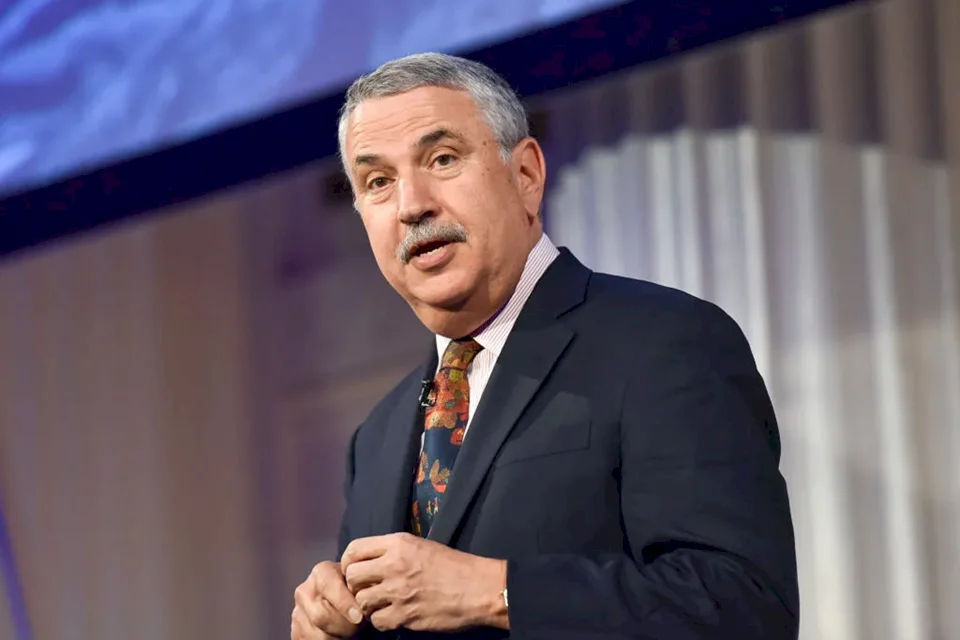
Friedman to Middle East War Leaders: "You Have All Lost"
SadaNews - "You have all lost", with this succinct statement, American writer Thomas Friedman summarizes the outcome of the ongoing war in the Middle East since October 7, 2023, the date of the Al-Aqsa Flood operation.
Friedman opens his article with a direct message to the leaders of Israel, Iran, the Islamic Resistance Movement (Hamas), Hezbollah in Lebanon, and the United States, stating: "You have all lost." He sees that none of these parties are willing to form an independent inquiry committee to review their performance during the conflict, as the results of any investigation would reveal the extent of the political, military, and moral failures that have led the region to this scenario.
Friedman describes the ongoing confrontations on multiple fronts in the region as a "war lost by everyone", considering that its continuation is partly due to the leaders' awareness that stopping the fighting would be followed by a harsh political, economic, and moral reckoning. According to the writer, every party entered the war with ambitious goals but ended up with results far from their aspirations.
Starting with Hamas, Friedman states that the October 7 operation was based on the assumption that it would ignite a wide regional uprising involving the "resistance" forces, which would lead to weakening or eliminating Israel.
However, he believes that the movement did not propose a political project for co-existence or settlement, but rather relied on comprehensive military confrontation. Although the war has contributed to increasing international sympathy for the Palestinians and highlighting their suffering, the movement—according to the writer—has not achieved a lasting political gain that leads to the establishment of a Palestinian state or the end of occupation.
Conversely, Friedman sharply criticizes Israeli Prime Minister Benjamin Netanyahu and his right-wing government, considering that Israel responded with a devastating war that inflicted enormous human losses in Gaza and caused significant damage to its international standing.
He says that Netanyahu succeeded in weakening Hamas militarily but failed to provide a moderate Palestinian political alternative, making the war appear to many as a vast destruction process that does not pave the way for a political solution or future peace.
The writer notes that Israel has spent billions of dollars and lost a significant part of its support from liberal Western circles, while Hamas still retains influence in parts of the Gaza Strip.
Friedman also sees that Netanyahu is facing increasing internal pressure regarding his responsibility for failing to prevent the October 7 attack, which explains, according to him, his opposition to any formal investigation that could harm his political future.
Regarding Lebanon, Friedman believes that Hezbollah has plunged the country into a wide confrontation with Israel without a comprehensive national consensus, leading to widespread destruction and displacement. He states that the party presented itself during the war as part of an Iranian-led axis, which has strengthened internal criticisms directed at it, at a time when Israeli military operations expanded within Lebanese territories.
As for Iran, the writer sees that the war has revealed the limits of the US and Israeli strategies that relied on weakening or overthrowing the regime through military strikes.
Friedman clarifies that despite the losses suffered by Tehran, it has managed to withstand and use influential pressure tools, most notably threatening navigation in the Strait of Hormuz and impacting global energy markets.
However, he adds that Iranian leadership also faces increasing internal questions about the viability of the massive spending on its nuclear program and regional projects amid the ongoing economic crises that the Iranians are suffering from.
Friedman also addresses the role of US President Donald Trump, considering that he may achieve a limited achievement if he manages to reach an agreement that restricts the Iranian nuclear program. However, he warns that any such agreement might require making economic and political concessions that grant the Iranian regime a new opportunity to persist, which could expose the US administration to widespread criticism.
The writer concludes that the war was run by leaders who placed their own calculations and political ambitions above the interests of their peoples. In his view, the only hope lies in a ceasefire and opening up space for a political process and public accountability for the leaders who contributed to prolonging the conflict.
Friedman ends his article with an implicit call for the peoples to question their leaders: "What were you thinking? Leave here", holding all parties responsible for the tragedy experienced by the region today.
 Follow the latest Sada News via Google News
Pentagon Accused of Concealing U.S. Military Losses in War

Kuwait Denies Allegations of Its Involvement in Operations Against Iran

Israeli Media: Government Meeting Moved to a "Safe Location" Due to Tensions with Iran

ضباط بجيش الاحتلال: المستوى السياسي بدعم اعتداءات المستوطنين بالضفة

Settler Outburst and Accelerating Escalation in the West Bank Amid Warnings of an Imminent...

American Report Reveals the Depth of Arab Disagreements on Managing the Crisis with Iran a...

Report Reveals Reasons Behind Washington's Freeze on Escalation Against Iran
