

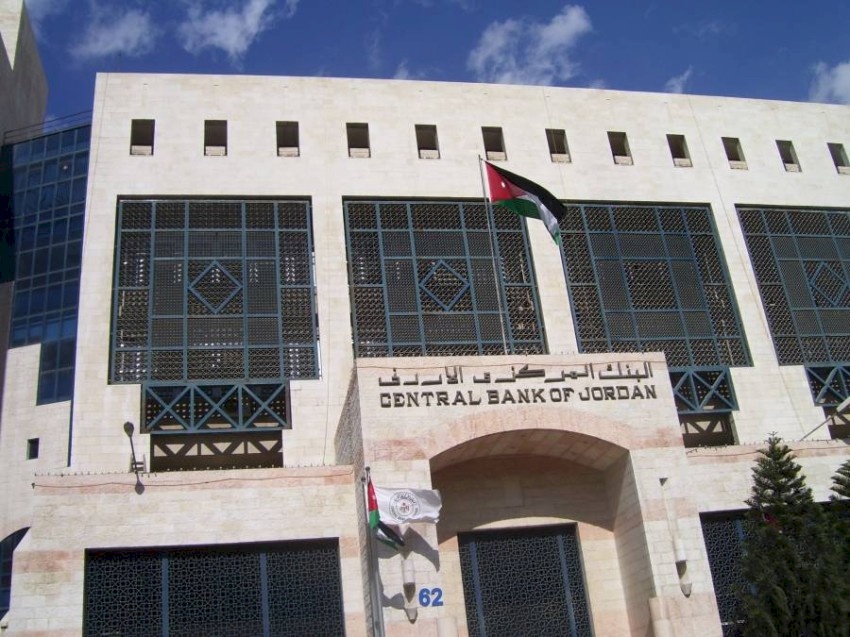
Jordan's Central Bank Decides to Maintain Interest Rates
SadaNews - The Open Market Operations Committee at the Central Bank of Jordan decided on Thursday to keep the "central bank's main interest rate" unchanged at its current level of 5.75%, while maintaining the interest rates of various monetary policy tools unchanged.
This decision by the Open Market Operations Committee comes in line with the bank’s goal of maintaining monetary and financial stability in the kingdom and aligning the structure of local interest rates with the prevailing levels of interest rates in regional and international financial markets.
The committee confirmed the central bank's continued approach of closely monitoring all global and regional economic developments and its readiness to take necessary proactive measures to strengthen the resilience of the national economy.
In this context, a set of precautionary measures announced by the bank at the beginning of April, amounting to 760 million dinars, is in line with this approach, supported by robust monetary and economic indicators; foremost among these are the central bank's foreign currency reserves, which reached 26.8 billion dollars by the end of March 2026, achieving an increase of 1.3 billion dollars from their level at the end of last year.
These reserves are sufficient to cover the kingdom's imports for 9.4 months, exceeding the international standard for reserve adequacy by nearly three times, thus forming a strong safety valve against external shocks.
Concurrently, the dollarization rate witnessed a significant decline, reaching 18.1% by the end of February 2026, compared to 18.8% for the same period last year, reflecting a growing confidence in the national currency and the effectiveness of monetary policy. The inflation rate also recorded low levels at 1.4% during the first quarter of the current year, supporting the competitiveness of the national economy and providing sufficient flexibility to deal with fluctuations in global prices.
These indicators complement the resilience of the Jordanian banking sector and the soundness of its performance, as periodic tests have confirmed the banks' ability to continue operating efficiently, while maintaining comfortable levels of liquidity, profitability, and capital adequacy.
In terms of macroeconomic performance, indicators showed that tourism income reached about 1.65 billion dollars during the first quarter of the current year, and remittances from Jordanians abroad increased by 12.7% in the first two months, reaching 740 million dollars, while national exports grew by 3% to reach 1.9 billion dollars. Foreign direct investment also recorded a growth rate of 25.1% over the past year to about two billion dollars.
In light of this, 2025 saw a continued gradual improvement in the economic growth rate, which rose to 3% in the last quarter of 2025 compared to 2.6% in the same quarter of 2024, confirming the Jordanian economy's ability to maintain a sustainable and stable growth path despite all the challenges in the regional and global economic environment.
 Follow the latest Sada News via Google News
Gold Heads for First Weekly Increase in 5 Weeks

Wall Street Banks Intensify Hiring in the Gulf to Keep Up with "War Deals"

Oil Continues to Decline with Increased Flows through Hormuz and Progress in Iran Talks

Gold Recovers After Waller's Speech and Easing Tension Over U.S. Rate Hike

Aluminum Prices Drop to Lowest Level Since February Amid Dollar Strength

Bitcoin Drops Below $60,000
World Gold Council: The second half of 2026 is a critical turning point for gold prices
