
Egypt establishes first sodium cyanide production plant in the Middle East
Economy SadaNews - The Egyptian government announced on Saturday the establishment of the first sodium cyanide production plant in the Middle East in Alexandria Governorate on the Mediterranean coast, with an annual production capacity of 50,000 tons and investments of 200 million dollars in the first phase.
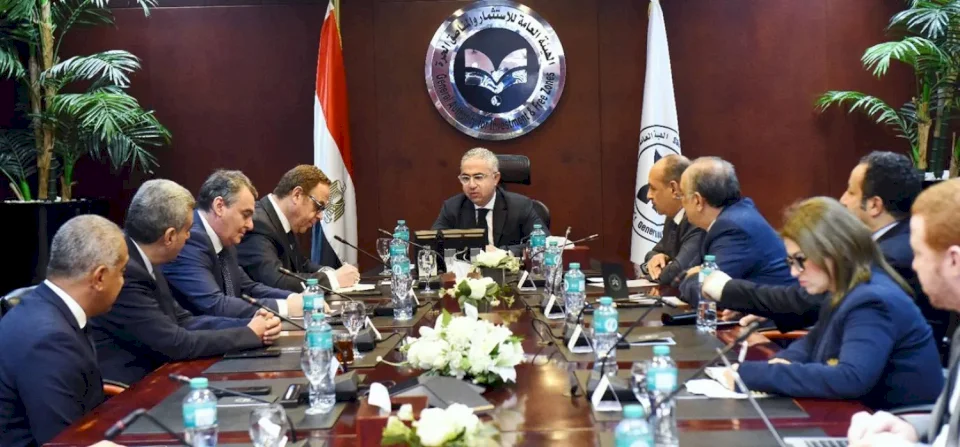
The Egyptian Cabinet's statement mentioned that the CEO of the General Authority for Investment and Free Zones, Mohamed Al-Jawsiqi, received a delegation from "Draskim Specialty Chemicals" Company to discuss the steps for establishing the company's sodium cyanide production plant at the Sidi Kerir petrochemical industrial complex in Alexandria.
The statement indicated that the company aims to start production in 2028 after completing the first phase of the plant, with an initial investment of 200 million dollars to produce and export 50,000 tons of sodium cyanide, the substance used for gold extraction. As for the second phase, there will be a study to double the production amount or produce other derivatives of sodium cyanide, culminating in the production of sodium-ion battery components in the third phase.
Al-Jawsiqi emphasized his support for "Draskim" Company and providing all facilities to accelerate the establishment of the plant and start production as soon as possible, as the plant’s plans align with many of the government’s developmental goals, such as increasing exports, transferring technology, deepening local manufacturing, and employing labor.
He added that the company’s new plant would benefit from the economic reform program implemented by various state agencies, which has resulted in a significant improvement in monetary, financial, investment, commercial, and logistical indicators.
Al-Jawsiqi urged Egyptian companies, including "Draskim," to adopt an integrated manufacturing strategy for export, with a particular focus on African markets, in light of the competitive advantage that Egyptian products enjoy within the continent and the wide opportunities for market access provided by the trade agreements Egypt has joined, particularly the "African Continental Free Trade Agreement."
He clarified that the Ministry of Investment and Foreign Trade aims to achieve an increase of about 4 billion dollars in exports compared to 2024, which recorded exports of 7.7 billion dollars, relying on maximizing the benefits from the high competitiveness sectors, led by the chemicals sector.
He added that the products of "Draskim" Company from sodium cyanide have an added advantage due to their importance to gold mines in Africa, which leads the world in this domain and accounts for about a quarter of global gold production.
He pointed out the importance of the company’s products from sodium-ion batteries in achieving the Egyptian government's goal of increasing the local component of renewable energy storage batteries, which can be used in data centers and to support power transmission networks.
Bassam Al-Shami, Vice President for Strategic Partnerships at the Austrian "Petrochemical Holding" Company, the largest shareholder in "Draskim," stated that the project partner, Czech company "Draslovka," will, for the first time, transfer its technology developed inside its facilities in the United States to Africa and the Middle East; to contribute to transforming Egypt into a leading hub for gold extraction technology and the production of sodium-ion batteries, the most sustainable and cost-effective alternative to lithium-ion batteries.
Andrei Yurokievich, Vice President for Strategy and Business Development at "Petrochemical Holding," said that the company's plant in Egypt will provide up to 500 direct job opportunities and will generate annual dollar revenues of about 120 million dollars, in addition to enhancing and ensuring the stability and sustainability of local supply chains and enhancing Egypt's regional role, as it will be the first sodium cyanide production plant in Egypt and the Middle East, marking a qualitative leap in the chemicals sector.
 Follow the latest Sada News via Google News
The World Bank Warns: "The Worst-Case Scenario" for Global Growth is Approaching

Trump Prepares to Impose New Tariffs on Dozens of Economies

Gold Surpasses $4,100 as Selling Pressure Eases

Oil Rises for the Fourth Day as Supply Risks Escalate

An Additional $8 Billion.. A New Account from the Pentagon on the Cost of the War with Ira...

London Stock Exchange Enters the Era of 24/7 Trading

Shamaran Petroleum: Suspension of Oil Production in Duhok Fields in the Kurdistan Region o...
