

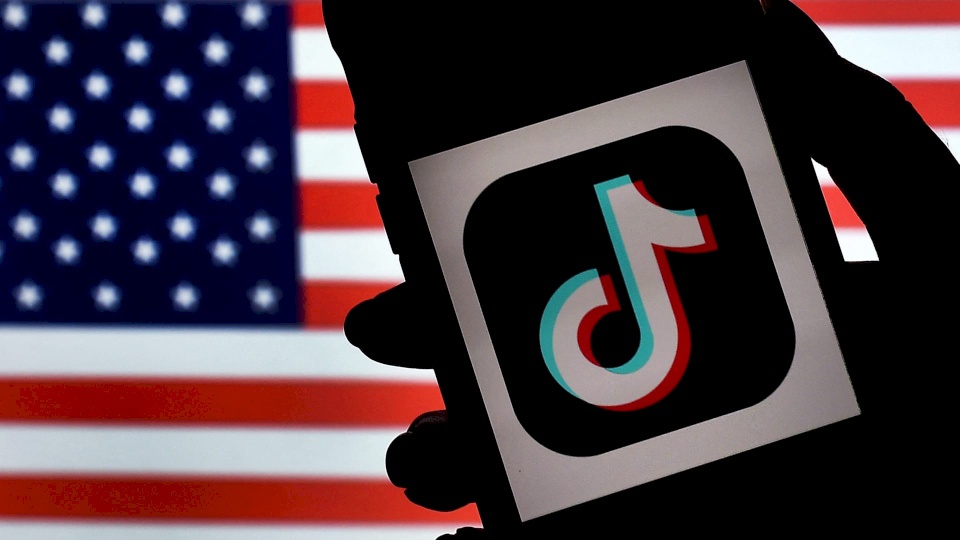
"TikTok" Under American Umbrella... What Does It Mean for Users, Data, and Algorithms?
SadaNews - The move by "TikTok" towards establishing a joint venture with a majority American ownership is not merely an administrative restructuring; it comes in response to years of political pressure and security scrutiny, as well as ongoing questions about who actually controls one of the most influential digital platforms in the United States.
At its core, this arrangement seeks to answer a highly sensitive question: Can a platform owned by a Chinese company operate safely on a large scale within the American digital system? By placing "TikTok" operations within a new entity under the control of American investors, the company is attempting to adapt to U.S. legal and regulatory requirements without exiting the market.
Under the proposed structure, the parent company, "ByteDance," will retain only a minority stake, while governance and operational oversight will be transferred to American parties. For U.S. lawmakers, this legal and institutional separation is the essence of the deal; it aims to remove American user data from any potential foreign influence.
What Will Change for Users... and What Will Remain?
For ordinary users, the most significant aspect of this transformation may be continuity; the app is expected to function in almost the same manner. Content, creators, recommendation algorithms, and advertisements will all remain as users are accustomed to, but behind the scenes, the changes will be much deeper; user data in the United States will be stored and managed domestically, subject to U.S. privacy and security laws, with clearer restrictions on access and stricter auditing and accountability mechanisms.
"TikTok" had previously begun transferring American data to local infrastructure, but the joint venture aims to institutionalize and legalize this separation. For the user, this does not mean an absolute disappearance of privacy risks; no major social platform is free from challenges, but it reduces the legal ambiguity about who ultimately holds power over the data and who is held accountable in the event of any breach.
The Algorithm Question
The concerns are not limited to data alone; critics of "TikTok" have repeatedly pointed out that the recommendation algorithm itself represents a source of tremendous power and influence; it controls what users see, what is amplified, and what is marginalized, which may affect public, cultural, and political discussions. The new project is supposed to ensure the operational independence of the algorithms within the U.S. market from the parent company, though this independence, while reassuring theoretically, remains practically complex. Algorithms are constantly changing systems and require precise technical oversight to ensure no indirect influence on them. Legislators and researchers are likely to continue demanding more transparency about how these systems are developed and updated.
A Strategic Compromise for Survival
For "TikTok" as a company, this deal represents a fraught compromise; the United States is one of its most important markets in terms of advertising revenue and cultural influence, and losing it would be a harsh blow. In return, accepting a reduction in the parent company's ownership and influence may be the necessary price for continuity, but this arrangement also limits "ByteDance's" ability to direct the platform's future within the United States regarding partnerships, policies, or even certain aspects of product development. Tension will remain between regulatory compliance and maintaining a unified global platform identity.
A Precedent for the Tech Sector
The impact of this step goes beyond "TikTok" itself; it reflects a broader shift in governments' views of major digital platforms, where data sovereignty has become a prerequisite for entering markets, not just an additional feature.
If this model succeeds, it may set a precedent for other tech companies operating across sensitive geopolitical boundaries. If it stumbles, it may strengthen calls for tightening restrictions or even complete separation between technology and global markets.
Ultimately, the American "TikTok" project is not just about a single company, but about the distribution of trust, power, and accountability in the digital age. It gives users a greater sense of security without altering their daily experience, provides regulators with clearer leverage, and gives "TikTok" a chance to remain in a vital market.
The question remains: Will this legal separation be enough to convince everyone that control is real and not merely nominal? The answer will depend on the level of transparency and implementation, not just the terms of the deal.
 Follow the latest Sada News via Google News
After Deschamps' Departure... Zinedine Zidane Tops the Candidates to Lead France

Mbappe Surpasses Messi and Becomes the All-Time Top Scorer in the World Cup

England Defeats France and Achieves Largest World Cup Achievement Since 1966

Messi Refused to Play for Spain and Missed 3 World Cups

Publishers Sue Google for Allegedly Using Books to Train Artificial Intelligence

Google Expands Capabilities of Google Search Console to Support Social Media Accounts

The Mediterranean Table... An Ancient Diet Revealing Its New Secrets for Health and Longev...
