

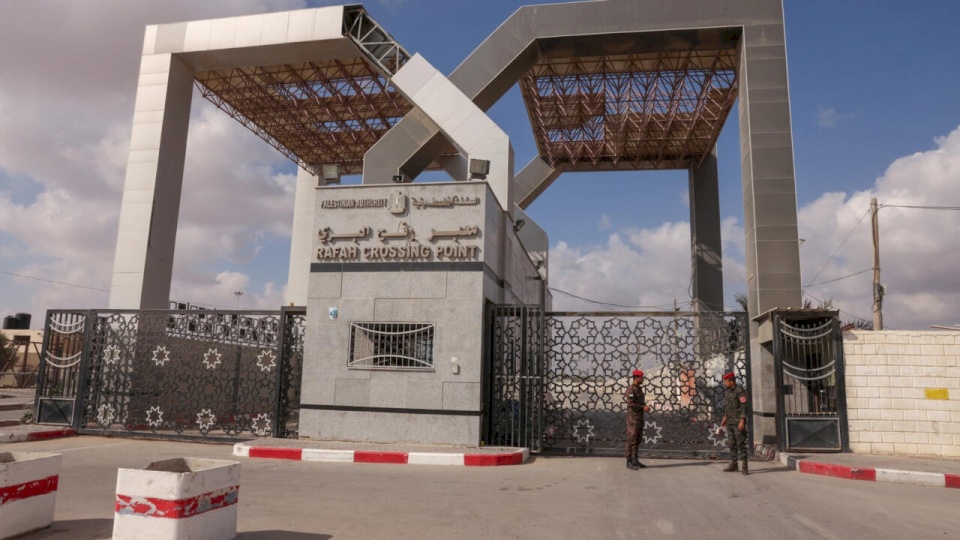
"A Gateway for Exit, Not Return".. Details of Israeli Plans Regarding the Rafah Crossing
SadaNews - Reuters reported from three sources that Israel is seeking to limit the number of Palestinians returning to Gaza via the Rafah crossing from Egypt, in order to ensure that the number of those leaving through the crossing exceeds those returning.
The sources, who spoke on condition of anonymity due to the sensitivity of the issue, stated that the method by which Israel intends to impose restrictions on the number of Palestinians entering Gaza from Egypt has not yet been clarified, nor has the ratio of departures to arrivals that it seeks to achieve.
An Israeli official told Reuters that the government will determine when to open the borders, and that Palestinians will not be able to leave Gaza or enter it without Israeli approval.
The sources indicated that Israel also wishes to establish a military checkpoint inside the Gaza Strip near the border, requiring all Palestinians departing or returning to go through it and undergo Israeli security checks.
Two sources reported that "Israeli officials insisted" on the establishment of this military point to inspect departing or returning Palestinians.
The head of the Palestinian technocrat committee, Ali Shaath, announced yesterday, Thursday, that the Rafah crossing will open next Thursday.
Shaath stated that the opening of the crossing is part of a transition process aimed at improving daily life for residents, rebuilding institutions, and restoring order, emphasizing that the Rafah crossing represents a lifeline for Palestinians and a symbol of opportunity and dignity, despite the challenges ahead.
The crossing is effectively the only outlet for the entry and exit of the more than two million residents of Gaza.
The Israeli occupation has used the closure of the Rafah crossing as a pressure tool on the residents of Gaza, continuously keeping it closed for 20 months, only allowing it to be opened in one direction for 40 days during the ceasefire that took place on January 19, 2025, limiting the number of departures to 300 people daily before re-closing it at the beginning of March last.
 Follow the latest Sada News via Google News
Morocco Hosts Formative Exercise for International Stabilization Force in Gaza

Sheikh Holds Meeting with Security Leaders to Follow Up on Current Developments

Hebrew Channels: The Likelihood of Israel's Participation in the Attack on Iran is Increas...

Netherlands Sets September Deadline for Ban on Settlement Products

12 Martyrs in Gaza Strip since Dawn Today

A Series of Important Decisions Taken.. The Cabinet Discusses Developments in the Deterior...

Organizations of the Temple Prepare for the Largest Raid on Al-Aqsa on What is Called the...
