

Stroke Patients Regain Their Ability to Speak Thanks to This Innovation
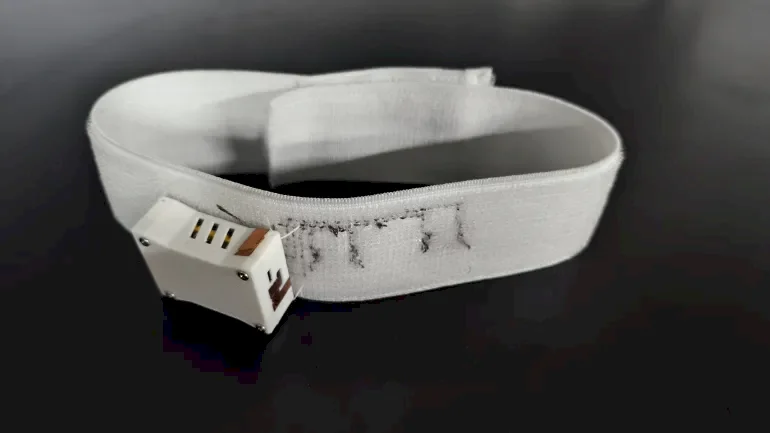
SadaNews - A research team from the University of Cambridge in the UK has successfully restored the voices of stroke patients who lost the ability to speak through a smart bracelet enhanced with artificial intelligence, worn around the patient's neck.
The team named the new device "Revoice," clearly indicating the technology's advantages that could eliminate the need for brain surgeries to implant chips.
The new device works by combining artificial intelligence and sensors to capture speech signals and emotions directly from the patient, then translating them into audible, understandable words and sentences.
The team hopes to use the device with patients suffering from other neurological diseases in addition to strokes, including those with Parkinson's disease and motor neuron disease, according to a report by the British newspaper "The Independent."
The bracelet features a sleek design along with a very soft and flexible texture, which facilitates the capture of vibrations directly from the neck and throat muscles.
The device works by directly capturing the movements of muscles and lips, allowing the patient to attempt to speak without producing sound, while the device generates the voice on their behalf. At the same time, artificial intelligence analyzes data related to emotions and tone of voice to add a human touch to the produced voice.
The device has also succeeded in a pilot study conducted by the university on 5 patients suffering from dysarthria associated with strokes, achieving a success rate of over 95% for words and 97% for sentences.
One of the research team members, Luigi Occhipinti from the engineering department at the University of Cambridge, explained the device's role in treating patients, stating that it helps both the patient and the therapist develop a more effective treatment plan for regaining the ability to speak or fluency in speech, according to a report from the German news agency.
He added, "We have created a device that helps the patient communicate more effectively."
Juliet Bouverie, CEO of the Stroke Association, welcomed the new innovation, confirming that it is beneficial for more than 1.3 million stroke survivors in the UK alone.
She added that this device could significantly impact self-confidence, relationships, and independence after a stroke. Bouverie welcomed the preliminary research, stating it explores new ways to support stroke survivors facing communication difficulties.
The report from the German agency confirms that the research team intends to expand its study on the device before finalizing the technology and making it available to users, in order to enrich the real experience of the model.
Source: Independent + German
 Follow the latest Sada News via Google News
After Deschamps' Departure... Zinedine Zidane Tops the Candidates to Lead France

Mbappe Surpasses Messi and Becomes the All-Time Top Scorer in the World Cup

England Defeats France and Achieves Largest World Cup Achievement Since 1966

Messi Refused to Play for Spain and Missed 3 World Cups

Publishers Sue Google for Allegedly Using Books to Train Artificial Intelligence

Google Expands Capabilities of Google Search Console to Support Social Media Accounts

The Mediterranean Table... An Ancient Diet Revealing Its New Secrets for Health and Longev...
