

Human Rights Report: A Dangerous Pattern of Sexual Violence in Israeli Detention Centers and Prisons
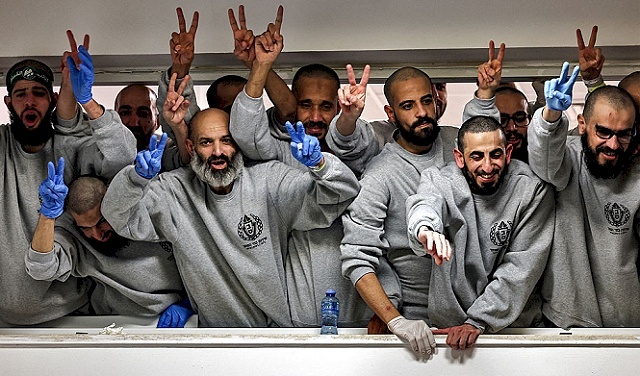
SadaNews - The Israeli human rights organization "B'Tselem" published a report yesterday titled "Hell on Earth", which provides a comprehensive update on the status of Palestinians detained by Israel as of January 2023. It confirmed that "Israeli prisons and detention centers should be considered as a network of torture camps against Palestinians in light of the extensive and coordinated attack launched by the Israeli regime against the Palestinian people since October 2023, culminating in the genocide being carried out by Israel in the Gaza Strip."
The report noted that "the foundations of the regime, established since the founding of the State of Israel, which facilitate the genocide in Gaza, rampant violence, ethnic cleansing in the West Bank, and the persecutions faced by Palestinian citizens in the State of Israel, are the same foundations that shape and define the Israeli regime's relationship with Palestinian prisoners, primarily through dehumanizing Palestinians as a group and then perpetrating extreme violence against them."
This update is based on 21 testimonies collected by "B'Tselem" from Palestinians who were released under the agreement between Israel and Hamas in October 2025 and in the preceding months. Due to threats directed at them, many of the released prisoners fear to provide testimonies about the harsh conditions of detention in Israeli prisons after Israeli authorities threatened to re-arrest the released prisoners if they spoke about their experiences in prison. These threats were issued both before and after their release and reflect the approach of the Israeli regime in undermining the freedom of Palestinians as a means of systematic oppression practiced against the Palestinian people.
The report emphasized that "the means employed by the Israeli apartheid regime to silence released prisoners form one component of a multi-faceted policy to strip the Palestinian collective of its humanity and deny their humanity – whether through detention and torture or through intimidation, political repression, and censorship."
This document also relies on recent research and reports issued by human rights organizations that continuously monitor the situation in Israeli detention facilities, as well as news publications, statements from the Israeli prison service, and materials included in petitions submitted to the Supreme Court.
It was revealed that since the beginning of the war on Gaza until the end of December 2025, 84 Palestinian prisoners and detainees, including one minor whose identity is known, died in Israeli prisons or detention centers. Human rights organizations and other media outlets reported larger numbers, with at least 94 fatalities, some of whose identities are unknown. By the end of August 2025, at least six Palestinians were killed during interrogations by the Shin Bet.
Fifty of the martyrs were from Gaza, 31 from the West Bank, and three were Palestinian citizens of Israel. Israel has only released the bodies of four of these prisoners, while it still holds the bodies of the remaining 80. In an attempt to conceal the crimes committed in detention centers, Israel also often obstructs reliable autopsy procedures of the bodies after death. This prevents clarifying and understanding the factors and circumstances that led to the deaths of dozens of prisoners for whom Israel is responsible for their safety and health.
Testimonies from released prisoners indicate that there is a dangerous pattern of sexual violence in detention centers and prisons, ranging from threats of sexual assault, through forced strip searches, to actual sexual assaults including beatings of the genital organs, causing severe injuries, including attacks by dogs and indecent sexual assaults using various tools.
Moreover, the testimonies presented in the report of the United Nations Committee Against Torture included information about sexual abuse of minors, electric shocks to the genital organs, and filming humiliating and sexual videos, while a recent investigation by the BBC also featured testimonies about sexual maltreatment inflicted by Israeli guards against Palestinian prisoners.
According to prisoner testimonies, violence and brutal assaults are a consistent and permanent part of the daily routine in prisons and detention centers: during the arrests themselves, upon arrival at the detention center, when entering and exiting cells, during counting, during the rare visits to the clinic, and before and after court sessions.
According to data published by the organization "Physicians for Human Rights", based on visits it conducted to 349 Palestinian prisoners between October 7, 2023, and June 30, 2025, it was found that 76% of Palestinian prisoners had been subjected to severe violence during detention, 65% of whom experienced at least one incident of severe violence inside the detention center, and 44% of them suffered from long-term injuries or medical issues due to this violence.
By September 2025, Israel was holding 350 minors. It was noted that 74% of imprisoned minors had been subjected to violence, 26% had been interrogated under pressure, and 21% were placed in solitary confinement for two days or more for pressure during interrogation. In March 2025, the boy Walid Ahmed (17 years old), who was detained in "Megiddo" prison, died as a result of starvation and denied medical treatment.
From the testimonies of Palestinian prisoners, a picture emerges of the systematic use of humiliation and psychological torment as a means of torture, aimed at breaking their spirits and undermining their morale. Released prisoners reported being filmed while nude, forced to "apologize" for crimes they did not commit and to chant "Long live the People of Israel", receiving severe insults against themselves and their families, threats of physical and sexual violence against their family members. In other instances, prisoners described how soldiers spat on them and urinated on them. In many other cases, prisoners spoke of psychological torture as part of an attempt to recruit them as informants for Israel.
By the end of September 2023, Israel was holding 4,935 Palestinians in its detention centers, and by September 2025, their number had surged to 10,863, 1,492 of whom were sentenced. The significant increase in the number of prisoners led to inhumane overcrowding in the cells, which was accompanied by a declared policy regarding the systematic abuse of their detention conditions. Many prisoners were forced to sleep on the floors of the cells, even in winter, and often without mats or blankets.
Other testimonies provided by recently released Palestinian prisoners speak of being housed in filthy cells, sometimes in complete darkness, deprivation of sleep, being handcuffed and shackled for prolonged periods, including while showering and using toilets, kneeling for long periods, and having their eyes covered for extended periods, even throughout the entire detention in some cases.
As part of the systematic deprivation of Palestinian prisoners' rights, the Israeli regime works to isolate them from the outside world, preventing oversight of their detention conditions. Since October 2023, family visits to prisoners have been completely canceled, and representatives of the Red Cross have been denied access to the prisons, despite their role in monitoring the conditions of prisoners. Additionally, prison authorities place obstacles in the way of Palestinian prisoners' ability to meet with their lawyers, including through systematic use of alleged "security suspicions" directed against the lawyers themselves, aimed at justifying the prevention of visits, and even banning lawyers from prisons for several months. Thus, the prevention of lawyer visits, in addition to severely violating prisoners' right to legal representation, also significantly hinders their families' ability to obtain information about their conditions and to follow up on their well-being.
According to an analysis conducted by "Physicians for Human Rights", there are testimonies indicating that the denial of medical treatment, along with other torture practices, leads to systematic deaths of Palestinian prisoners held in Israeli prisons and detention centers. Results from ten autopsies conducted on the bodies of Palestinian prisoners who died while in custody of the Israeli prison service since October 7 showed that in 6 out of 10 documented cases, medical treatment was denied.
In a report submitted by several human rights organizations to the United Nations Committee Against Torture in November 2025, it was noted that the organizations recorded numerous cases where Palestinian prisoners suffered from irreparable medical consequences due to the deliberate denial of medical care. Doctors who worked in a temporary hospital set up at the military detention center "Sde Teiman" reported cases of amputations due to violence, ongoing shackling, and lack of appropriate medical care. According to these testimonies, all patients in this hospital were shackled by all four limbs and had their eyes covered, even while receiving medical treatment. The restraints prevented them from accessing toilets and forced them to relieve themselves in diapers. In other testimonies gathered by "B'Tselem", severe injuries and untreated chronic illnesses were described, including cases of amputations.
Prisoners and detainees continue to be subjected to violence and maltreatment in a repeated, systematic, and organized manner – which includes, among other things, electric shocks, the use of gas and sound bombs, causing burns by extinguishing cigarettes or pouring boiling liquids on their bodies, firing metal-coated rubber bullets, beatings with batons, and inciting dogs.
The living conditions for prisoners and detainees remain inhumane, including severe overcrowding, prolonged continuous restraints, and preventing contact with the outside world, in addition to deliberate starvation, poor-quality food, and deprivation of basic sanitary conditions such as bathing, changing clothes, and access to clean drinking water. The "Rakefet" wing in Ramla Prison, which is entirely underground, is particularly notable for the prevailing inhumane conditions.
Further evidence presented to the United Nations Committee Against Torture indicates that Palestinian female prisoners do not receive feminine hygiene products nor women's treatments, and that pregnant women are also denied similar treatments.
Due to the combination of starvation, poor food, severe overcrowding, deprivation of living and basic hygiene conditions, and denial of medical treatments, almost all Palestinian prisoners have suffered a deterioration in their health during detention periods. One prominent example of this is the outbreak of scabies in detention centers, where reports in October 2024 indicated that a quarter of Palestinian prisoners held by the Israeli prison service had been diagnosed with scabies.
The denial of medical treatment to prisoners continues to be a method of torture in itself, leading to permanent injuries including amputations and loss of hearing and sight, and even death. Particularly notable is the spread of untreated skin scabies, which continues to spread in prisons and detention centers.
According to a report from the Israeli prison service, 10,863 Palestinian prisoners were detained as of the end of September 2025. Among these prisoners,
7,425 are from the West Bank, including East Jerusalem, 2,931 are from the Gaza Strip, and 507 are from Arab citizens of the 48 areas. 3,521 of the detained Palestinian prisoners are classified as "administrative detainees", 1,492 are classified as "security prisoners", 2,623 are classified as "unlawful combatants" who are Palestinian detainees from Gaza imprisoned without trial, and 3,227 are classified as "security detainees" who are Palestinians undergoing judicial proceedings but have not yet been sentenced. Among the Palestinian prisoners, there are 350 minors and 48 women. Palestinian prisoners encompass all these groups.
 Follow the latest Sada News via Google News
12 Martyrs in Gaza Strip since Dawn Today

A Series of Important Decisions Taken.. The Cabinet Discusses Developments in the Deterior...

Organizations of the Temple Prepare for the Largest Raid on Al-Aqsa on What is Called the...

Smotrich: Israel Has No Interest in Joining the War Against Iran

Occupation Issues Military Order to Seize 5 Dunams of Land in Jaba'

Axios: Proposal for a 10-day Ceasefire Between Washington and Tehran and Two Options for M...

In a Rapid Pace.. The Occupation Builds a Huge Earth Barrier Inside Gaza
