

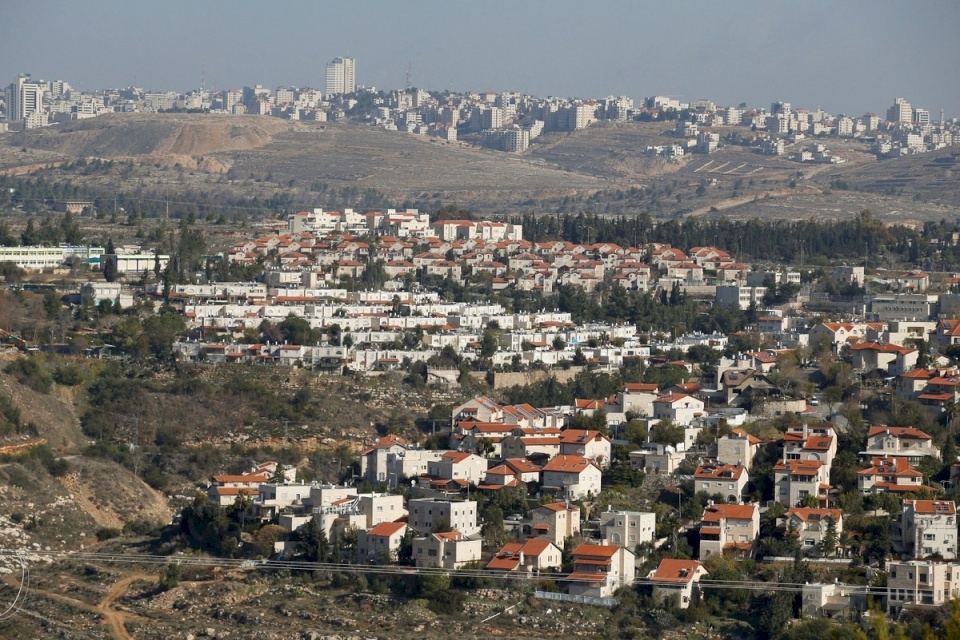
Occupation Discusses Two Settlement Plans in Sheikh Jarrah and Jerusalem Airport
SadaNews - The Jerusalem Governorate reported that the so-called Local Planning and Building Committee in Jerusalem intends to discuss tomorrow, Monday, the approval of two extremely dangerous settlement plans, which represent a qualitative escalation in the occupation's policy aimed at liquidating the Palestinian presence in East Jerusalem, completely separating it from its geographical and natural extension in the West Bank, in a blatant violation of international law and relevant international legitimacy resolutions.
According to a statement issued by the governorate today, Sunday, the first plan targets the lands of the former Jerusalem International Airport, stipulating the construction of approximately 9,000 colonial units north of the city of Jerusalem over an estimated area of about 1,243 dunams, creating a massive colonial barrier that cuts the geographical continuity between Jerusalem and Ramallah, delivering a fatal blow to the possibility of establishing an independent Palestinian state with geographical continuity.
It is noteworthy that the discussion of this plan was originally scheduled for December 2025, but the occupation authorities decided to postpone it at the time due to political considerations, before it was reintroduced on the committee's agenda.
The Jerusalem Governorate affirmed that the "Atarot Plan" cannot be separated from its long-term strategic goals, chief among them the elimination of what was known as the airport of the future Palestinian state, which represented an important symbol of sovereignty and politics. The plan also aims to entrench the separation between Palestinian communities located behind the wall and those in front of it by creating a human settlement barrier that prevents any possibility of establishing a Palestinian state with geographical continuity. This plan also falls under the "Greater Jerusalem" project from the Israeli perspective, which aims to annex approximately 10 percent of the West Bank area through a network of tunnels and bypass roads to connect settlements located northeast of Jerusalem. Additionally, the occupation seeks to alter the demographic balance in its favor through policies of expulsion and demolition against Palestinians, compared to settler population replacement, as evidenced by official Israeli documents and plans.
In a parallel and equally dangerous escalation, the committee is discussing the "Nahalat Shimon" plan in the Sheikh Jarrah neighborhood, specifically in the Al-Nuqay' area, which entails the demolition of the neighborhood and the construction of a settlement on an area of approximately 17 dunams, comprising 316 housing units on the ruins of homes of about 40 Palestinian families. This plan relies on a system of discriminatory racist laws that allow colonial associations to claim ownership of properties dating back to before 1948, while Palestinians are denied the same right to reclaim their properties from which they were forcibly displaced.
The Jerusalem Governorate warned that what is happening in Sheikh Jarrah goes beyond a single plan; it constitutes a systematic policy to reshape the neighborhood demographically and urbanistically, with additional settlement projects being proposed, alongside concerted efforts to link these projects to settlement hotspots in the eastern sector, passing through areas like Karam Al-Mufti and Mount Al-Masharif, including the vicinity of the Hebrew University. This linkage aims to divide the neighborhood into northern and southern sections, facilitating control over it, and connect the eastern and western sections of Jerusalem through a contiguous settlement ring within Palestinian neighborhoods, especially in areas historically classified as a dividing region between 1948 and 1967.
The governorate pointed out that settlement associations, with the support of the occupation authorities, have been leading organized campaigns for decades to evacuate Palestinian families in Sheikh Jarrah, using unprecedented legal, planning, and administrative tools to achieve the same goal of forced displacement and solidifying settlement presence in the heart of the neighborhood. These policies include large-scale "urban renewal" projects that encompass the construction of about 2,000 housing units for settlers, exceeding the number of existing Palestinian homes in the entire neighborhood, totally excluding the Palestinian residents, along with the registration and settlement of lands in favor of the settlers, and confiscating public spaces, reallocating them to serve Jewish religious and national projects.
The Jerusalem Governorate emphasized that the Sheikh Jarrah neighborhood is not just a residential area; it is one of the most important historical neighborhoods with geopolitical and diplomatic significance in the city. Over the decades, it has hosted symbols of Palestinian struggle and prominent national and international institutions, including the historic "Shepherd" hotel, Karam Al-Mufti, the Palestine Liberation Organization office, and several Arab consulates that continued to function until 1967, prominent among them being the Saudi, Iraqi, Kuwaiti, and Lebanese consulates. Thus, targeting the neighborhood comes within the context of targeting its political and historical symbols, attempting to erase what is known as the Green Line, and redrawing the geopolitical map of the city to serve the colonial project.
The governorate stressed that these plans constitute crimes of forced displacement and illegal alteration of the existing reality, affirming that it will continue to follow up on these matters at all legal, political, and international levels, defending the rights of our people, and the status of East Jerusalem as the capital of the Palestinian state.
 Follow the latest Sada News via Google News
Morocco Hosts Formative Exercise for International Stabilization Force in Gaza

Sheikh Holds Meeting with Security Leaders to Follow Up on Current Developments

Hebrew Channels: The Likelihood of Israel's Participation in the Attack on Iran is Increas...

Netherlands Sets September Deadline for Ban on Settlement Products

12 Martyrs in Gaza Strip since Dawn Today

A Series of Important Decisions Taken.. The Cabinet Discusses Developments in the Deterior...

Organizations of the Temple Prepare for the Largest Raid on Al-Aqsa on What is Called the...
