

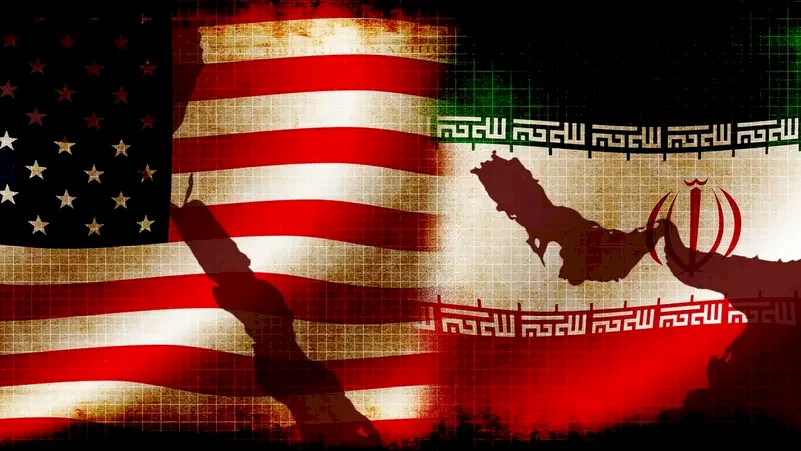
After Renewed Clashes.. Mediators Seek to Revive Diplomatic Path Between Washington and Tehran
SadaNews - Countries acting as mediators between Iran and the United States are intensifying their efforts to bring both parties back to the diplomatic path, after the ceasefire suffered a setback with the renewal of military confrontations and exchange of threats, despite the memorandum of understanding signed by both sides on June 17.
Mediators' Efforts
In an attempt to revive negotiations, a Qatari delegation arrived in Tehran on Friday, according to Tasnim news agency, as part of Doha's efforts playing a mediating role between Iran and the United States.
A source familiar with the matter told Reuters that Qatari negotiators met with officials in Iran on Friday to de-escalate tensions and discuss the issue of the Strait of Hormuz.
Pakistan, which is also involved in mediation efforts, called on Iran to maintain the "peace gains that were achieved with difficulty," according to statements by Pakistani Prime Minister Shahbaz Sharif.
On Saturday, the Iranian news agency Tasnim reported that Iranian Foreign Minister Abbas Araqchi arrived in Oman, which is mediating to end the war that has increased instability in the Gulf region and raised prices globally since the U.S. and Israel conducted airstrikes on Iran on February 28.
The Hormuz File
Araqchi met with Omani Foreign Minister Badr al-Busaidi on Saturday to discuss developments regarding the Strait of Hormuz, which is one of the main points of contention between Tehran and Washington.
Iranian state media reported that Araqchi would discuss "arrangements related to ensuring safe passage for ships through the Strait of Hormuz," while Washington seeks a public commitment to guarantee navigation and security of passage through this vital waterway.
CBS News and its partner BBC reported that U.S. Vice President J.D. Vance, Secretary of State Marco Rubio, Special Envoy Steve Witkoff, and Jared Kushner, Trump’s son-in-law, are expected to lead talks with Araqchi today.
Reuters was unable to independently verify the reports, which did not clarify whether the talks would take place in Oman or be conducted remotely online.
Later on Saturday, the Iranian news agency Fars reported that an Iranian source stated that there will be no negotiations unless the United States retracts its positions.
Iran continues to impose restrictions on navigation in the strait, allowing ships to pass only through a single channel along its coasts, after having closed it during the war.
During the war, Iran kept the strait effectively closed, leading to a heightened clash with the world’s strongest military power.
U.S. officials said on Friday that the United States demands that Iran publicly announce it will stop attacking ships in the strait and guarantee the opening of all navigation routes without imposing any tolls on this waterway through which about 20 percent of global oil supplies passed before the war broke out.
While the United Nations Convention on the Law of the Sea guarantees the right of "innocent passage" in international straits, including the Strait of Hormuz, Tehran refuses to return to the navigation regime that was in place before the war.
Axios and Politico reported that Washington informed Tehran that it was waiting until Saturday for a public commitment not to target ships in the Strait of Hormuz again.
U.S. officials said on Friday that Iran informed U.S. officials that the latest attacks on navigation in the strait were carried out by "an undisciplined element within its system," in comments that seemed aimed at calming tensions.
Mutual Escalation
President Donald Trump escalated his rhetoric, accusing Iran of seeking to assassinate him and threatening to "obliterate and destroy" Iran entirely if it attempted any act against him.
Trump stated that he ordered the U.S. military to prepare for strikes against Iran if Tehran carried out or attempted to assassinate the president.
He wrote: "A thousand missiles are ready and in launch position toward the Islamic Republic of Iran, and they will be followed by thousands more immediately, if the Iranian government carries out its threats, which have echoed around the world, to assassinate or attempt to assassinate the current president of the United States, which in this case is me!".
The Wall Street Journal and other U.S. media reported a few days ago that Israel conveyed intelligence information to Washington indicating that Iran had recently devised a plan to assassinate Trump.
Meanwhile, Iranian Leader, Mojtaba Khamenei, in a written message published on his Telegram account on Saturday, stated that avenging his predecessor and his father is "the demand of the nation" and must be achieved.
Khamenei added in the message: "We pledge to avenge the blood of the martyr commander and all the martyrs of these two wars from the killers and criminals".
In a related context, the Secretary of the Supreme National Security Council of Iran, Mohammad Bagher Qalibaf, vowed to respond to any attack targeting Iranian infrastructure, asserting that Israel "will not be immune" to any potential Iranian response.
The temporary agreement reached last month aimed to pave the way for ending the conflict that has claimed thousands of lives and adversely affected global energy supplies, raising concerns over a global economic slowdown.
 Follow the latest Sada News via Google News
After Renewed Clashes.. Mediators Seek to Revive Diplomatic Path Between Washington and Te...

Mojtaba Khamenei Vows to Avenge His Father

Injuries in Attacks by Settlers in Various Areas of the West Bank

Rescue of a Soldier and Two Settlers Who Entered Jericho

Gaza Health: 7 Martyrs in the Last 48 Hours

As Talks Renew, Trump Threatens to 'Completely Annihilate Iran' If It Attempts to Assassin...

In the midst of settler attacks.. the occupation launches a campaign of arrests in the Wes...
