

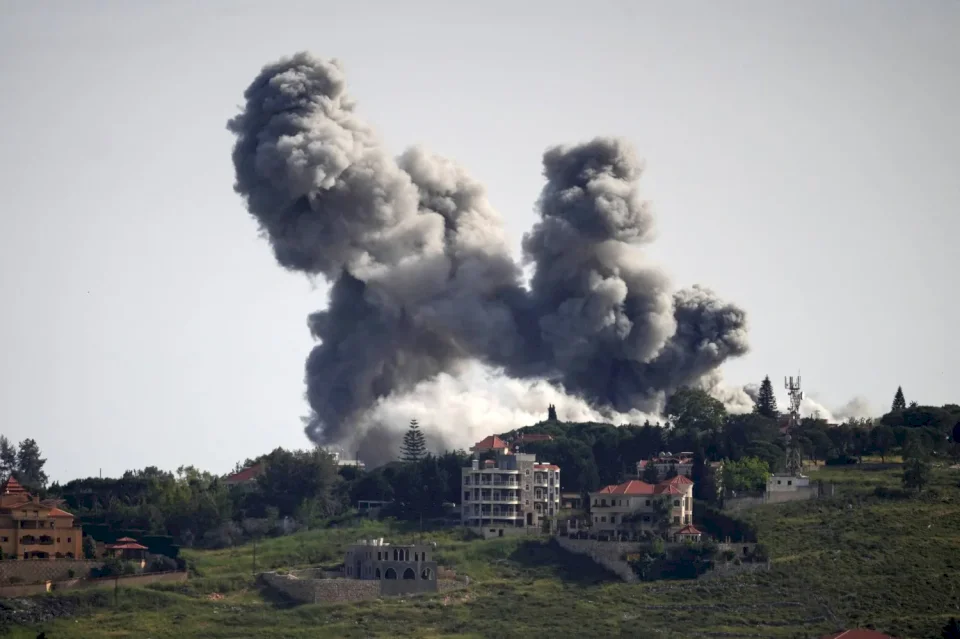
Why Are Israeli Attacks Intensifying on the Major Cities of Southern Lebanon?
SadaNews: Israeli attacks on the city of Nabatieh, the largest city in southern Lebanon, are escalating, a move that seems to reflect the Israeli army's intent to create what is described as a "military earthquake" deep within the southern Lebanon axis, relying on the geographical and military significance that the city holds, making it one of the most prominent strongholds in the south.
Nabatieh is located approximately 15 kilometers north of the Litani River, a site that endows it with exceptional importance on administrative, demographic, and economic levels, as it serves as a chief center in the region.
The city is also about 30 kilometers away from the Israeli border, which makes it a pivotal link between border areas and the internal regions of Lebanon.
According to field data, the importance of Nabatieh is not limited to its geographical distance but extends to its military significance, given its oversight of a network of strategic roads connecting the eastern and central sectors of southern Lebanon.
These roads facilitate movement and supply between various southern regions, granting the city operational weight in any military confrontation occurring in the area.
Additionally, Nabatieh's proximity to several highlands and important sites, notably the historical Château de Saint-Gilles, which is located just about 8 kilometers away, adds to its strategic significance.
This fortress offers extensive fire and visual oversight over areas north and south of the Litani, which enhances the military value of the site and its surroundings.
Military assessments indicate that any Israeli pressure around Nabatieh aims to achieve a number of battlefield objectives, with the most notable being the isolation of the city from the surrounding villages, expanding the range of fire control north of the Litani River, in addition to establishing a new battlefield reality that limits freedom of movement in southern Lebanon.
Moreover, control of the area around Nabatieh or proximity to it grants an advantage in monitoring movements between the Litani River and the southern highlands, allowing for greater capability to track lines of movement and transit in the region, which explains a part of the Israeli military focus on this city during the current phase.
In parallel, the Israeli military focus is not limited to Nabatieh alone, as it extends to the city of Tyre, which is also considered one of the major cities of strategic importance in southern Lebanon.
Tyre is located approximately 80 kilometers south of the capital, Beirut, extending like a peninsula into the Mediterranean Sea, endowing it with a distinctive geographical position. The city is also about only 20 kilometers away from the Israeli border, which adds further military significance.
Militarily, Tyre's location provides the capability to oversee the coastal line of southern Lebanon, making it a critical point in the flow of movement and communication along the coast.
The city is considered a main transport hub connecting border villages and areas south of the Litani River to the Lebanese interior, leading up to Sidon and Beirut in the north.
The importance of Tyre is also highlighted through its role in connecting various southern regions with each other, making any targeting of it or its surroundings directly impactful on the flow of supply and movement between the south and the Lebanese interior.
In this context, it seems that Israel seeks to impede supply routes and disrupt movement paths between the southern regions and the Lebanese depth by targeting Tyre, alongside attempting to impose a new battlefield reality that enhances its capability to influence field developments.
Between Nabatieh and Tyre, it becomes clear that the Israeli escalation is focused on two cities that form geographical and military cornerstones in southern Lebanon; Nabatieh represents a land link between the various southern sectors and enjoys oversight over strategic roads and elevated sites, while Tyre represents the gateway to the southern coast and a main transport hub connecting border areas to the Lebanese interior.
This makes both cities central to any military movements aimed at reshaping battlefield balances in southern Lebanon and imposing new equations on the ground.
 Follow the latest Sada News via Google News
Pentagon Accused of Concealing U.S. Military Losses in War

Kuwait Denies Allegations of Its Involvement in Operations Against Iran

Israeli Media: Government Meeting Moved to a "Safe Location" Due to Tensions with Iran

ضباط بجيش الاحتلال: المستوى السياسي بدعم اعتداءات المستوطنين بالضفة

Settler Outburst and Accelerating Escalation in the West Bank Amid Warnings of an Imminent...

American Report Reveals the Depth of Arab Disagreements on Managing the Crisis with Iran a...

Report Reveals Reasons Behind Washington's Freeze on Escalation Against Iran
