

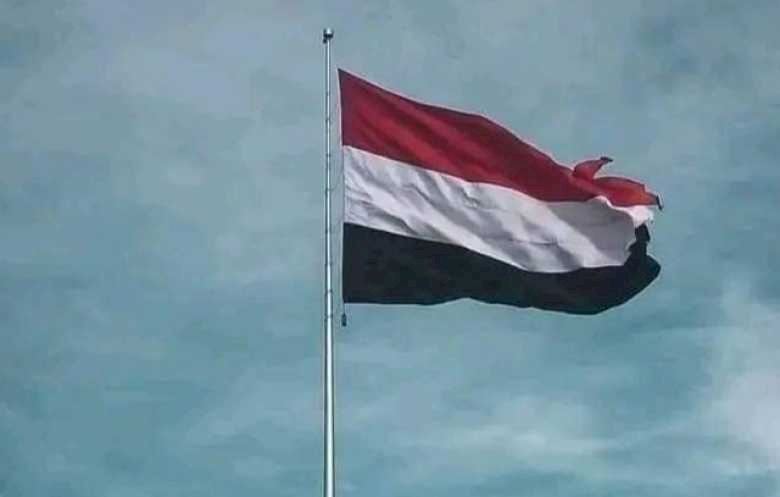
How do Yemenis envision the shape of the upcoming government?
SadaNews - Since the announcement of the resignation of the Yemeni government, led by Salem bin Barik, on January 16, and the assignment of Foreign Minister Shaif Al-Zindani to form a new government, speculations have increased regarding the shape of the upcoming government, the identities and affiliations of its ministers, and whether its formation will be subject to political or geographical quotas and other calculations.
These speculations come at a sensitive political moment as the Yemeni public, especially in what the legitimate government calls the liberated areas, seeks to see a government that aligns more closely with the ongoing transformations, promoting the restoration of sovereign decision-making and the liberation of national resources, as reflected in the general mood and the elite's discourse.
What is the background of the resignation?
The official Saba agency reported that Bin Barik's resignation of his government to the President of the Presidential Leadership Council, Rashad Al-Alimi, was made "to open the way for the formation of a new government that aligns with the current transformations, efforts to restore state institutions, enhance the unity of the sovereign decision, and entrench the values of partnership and collective responsibility."
Analysts viewed this as a direct indication of the existence of new political arrangements that require a change at the government level.
What are the possible scenarios for the formation?
With the new changes and the shifting influence in Eastern and Southern Yemen, and the nearly changed balance of power, the possible scenarios for the new government are varied, though it is difficult to determine its final shape.
1. Partial retention of the previous government with reliance on quotas
Yemeni political researcher Abdul Salam Muhammad suggests that the most likely first scenario involves retaining part of the previous formation while replacing other ministers according to the quota criteria resulted from the Riyadh Conference among the political forces and components, based on geography and political affiliation.
2. Technocratic government with balance considerations
The second scenario is the formation of a broad technocratic government that considers balance between the north and south, east and west, without the complexities of complete party quotas.
3. Limited emergency government
The third scenario, which is unlikely but possible, involves forming a small emergency government comprising national competencies to manage the current phase until the end of the war with the Houthis, whether through a political settlement or military resolution.
What are the expected priorities?
On his part, researcher Dr. Ahmed Wahhan expects that the new government led by Shaif Al-Zindani will retain some ministers from the previous formation to ensure institutional stability and benefit from successful administrative experiences.
Wahhan also predicts a decrease in party representation, with the possibility of greater representation for women this time.
Regarding priorities, he believes that economic, security, and military issues will be at the forefront of the government’s tasks, while continuing to depend on Saudi support to unify security and military formations in the liberated provinces within the framework of the Support for Legitimacy Coalition.
What is the role of the "regions"?
Wahhan emphasizes the necessity of reviewing the exclusion of certain regions with demographic weight and economic importance, foremost being the Tihama region, stressing the importance of enabling their competencies to hold executive positions.
From the Socotra archipelago, researcher Ahmed Al-Arqabi confirms that the general mood in the eastern region is optimistic about the recent transformations, which they view as a step towards restoring the state after years of exclusion and poor services.
He points out that the previous presence of the Southern Transitional Council raised fears of a return to the authoritarian governance models before 1967, and that recent changes have restored some hope.
Al-Arqabi demands fair representation for Socotra in the new government, reflecting its importance rather than settling for symbolic representation as was seen in previous governments, he believes.
In turn, educational researcher Aziz Rizq expresses his aspiration for the government formation to be based on standards of efficiency and integrity, away from polarization and narrow affiliations, and that the ministers’ compass should be Yemen alone.
Rizq sees that quotas, in their various forms, are among the main reasons for the failure of successive governments, as they weaken quality and efficiency standards, making it necessary to prioritize qualifications and experience over any other considerations.
What is the role of oversight?
Media researcher Dr. Nabeela Said believes that the upcoming formation will not be free from traditional names, and possibly those previously accused of corruption, but she confirms that current conditions impose unprecedented popular and media oversight.
She explains that any shortcomings or deviations in performance will appear quickly, due to community monitoring and media accountability, putting new ministers under pressure to prove their competence and achieve tangible results.
What are the most prominent hopes?
Amid the current transitional phase and the exacerbation of security and economic challenges, attention turns to the appointed Prime Minister Shaif Al-Zindani and what he will present in terms of a new government formation, amidst discussions of multiple leaked lists and an increase in rumors regarding the nominated names.
Regardless of the varied speculations, it is certain that the presidency has its own calculations this time, which will be reflected in the shape and directions of the government in the coming phase, and the most important for Yemenis is not the names or the quotas, but rather what the government possesses in terms of vision and presence on the ground.
Yemenis' voices are rising in necessity for the government to carry out its tasks and responsibilities from within Yemen, and to provide services, especially those related to meeting citizens' needs and improving their economic situations, which have worsened over years of conflict, with the roots of the financial crisis lingering since 2014 when the Houthi group seized the capital Sana'a and subsequently formed a government that followed it, pushing the legitimate government to move the central bank's headquarters to the city of Aden in 2016.
Source: Yemeni Press
 Follow the latest Sada News via Google News
Jordanian Army Intercepts 4 Iranian Missiles and 4 Drones

Death of a Moroccan Man During His Arrest in Italy Sparks Calls for Investigation

Due to Trump's Sanctions.. Canada Cancels Joint Ceremony with the US for Bridge Opening

Trump: We will make great progress with Beirut.. Aoun: It is time for Lebanon to be stable

The Lebanese Army Deploys in the South and Comes Under Gunfire; Israel Clarifies

Bezhkian: Directives from the Leader to End the State of No War, No Peace

Meeting Between Aoun and Trump Expected Alongside 'Experimental Areas'
