

Jerusalem: Recommendations to Restrict Palestinians' Access to Al-Aqsa during Next Ramadan
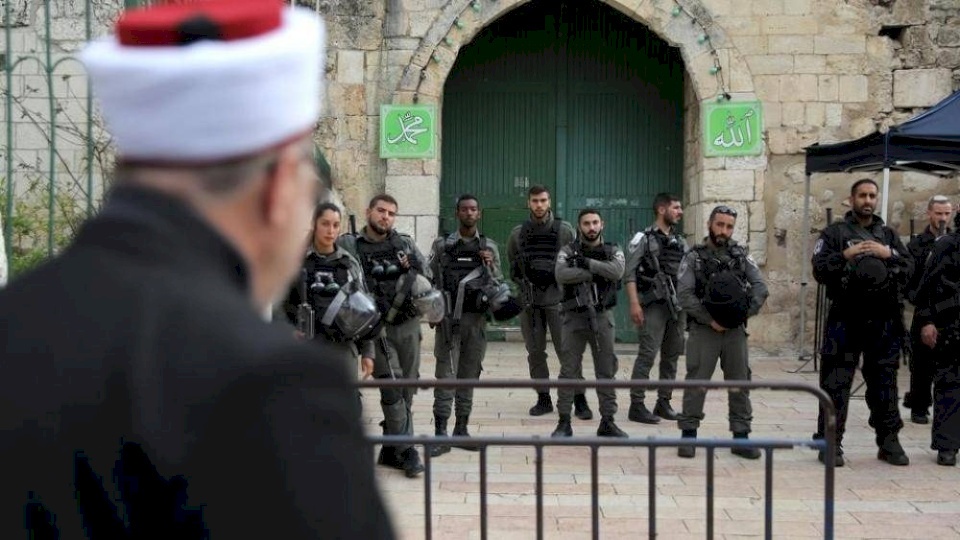
SadaNews: The Jerusalem Governorate considered that the Israeli occupation's measures, represented by the recommendations of the so-called "Israeli Parliamentary National Security Committee" to restrict access for worshippers from the West Bank to Jerusalem and the blessed Al-Aqsa Mosque during the upcoming month of Ramadan, constitute a flagrant violation of freedom of worship and an arbitrary preemptive measure.
The governorate clarified in a statement that the recommendations include restricting entry in both quantitative and categorical terms, and imposing arrests and pursuits against citizens, within the framework of preemptive plans aimed at enforcing more control and restrictions on Jerusalem and limiting the basic religious rights of Palestinians coming from the West Bank and Gaza Strip. It emphasized that the worst scenario is for these restrictions to become a tangible reality on the ground.
It noted that these measures come in the context of the escalating incursions by settlers into Al-Aqsa Mosque and the recording of unprecedented violations supported by the occupation authorities, which have seen restrictions double since October 2023, including imposing complicated and special permits and age restrictions, which deprive hundreds of thousands of Palestinians from accessing Al-Aqsa Mosque except in very limited numbers.
The governorate pointed out that citizens from the West Bank and Gaza Strip have viewed Ramadan for decades as a golden opportunity to enter Jerusalem, due to the occupation's prohibition on most of them accessing it throughout the year. During the Ramadans of 2024 and 2025, the occupation imposed unprecedented restrictions, limiting the number of entrants to Jerusalem to ten thousand worshippers weekly and only on Fridays, while requiring possession of a permit and a difficult-to-obtain electronic card, and exiting before evening, along with age restrictions on men, women, and children, which led to a partial emptying of Al-Aqsa Mosque and a significant reduction in the number of Friday worshippers from 250,000 before October 2023 to 80,000 in the second Friday of Ramadan 2025. For the first time since 2014, the occupation prevented nighttime i'tikaf in Al-Aqsa Mosque during the nights of Friday and Saturday, forcibly expelling the few worshippers who tried to stay, which contributed to the success of the occupation's unprecedented policy of controlling the mosque and imposing its restrictions.
The governorate clarified that the discriminatory reality in Jerusalem includes the closure of Palestinian neighborhoods and main streets during Jewish holidays and events to allow hundreds of thousands of settlers to access Al-Aqsa Mosque and the Western Wall and the Old City surroundings, while strict restrictions are imposed on Palestinians during Islamic and Christian holidays, especially during Ramadan, which turns the city into a closed military barrack with thorough inspections at the gates of Al-Aqsa Mosque and the gates of the Old City. The occupation justifies this with "security," while the real reason is its repressive policies and ongoing violations, as well as the continuation of the illegal occupation and its comprehensive oppression and aggression against our people.
It added that these discriminatory policies include settler attacks on Palestinians, preventing Christians from accessing the Church of the Holy Sepulchre to celebrate their holidays and religious occasions, reflecting a continuous reality of religious discrimination and systematic repression. Last Ramadan, an unprecedented new restriction was enforced inside Al-Aqsa Mosque, with the presence of occupation police at all hours during Fajr, Taraweeh, and Friday prayers, and thorough inspections of worshippers, even of i'tikaf tents, to arrest any Palestinian entering the mosque without a permit.
The governorate indicated that these restrictions not only affect the freedom of worship but also extend their impacts to include the economic movement in Jerusalem, including the commercial activity associated with Ramadan, which deepens the social and economic impacts on the city and its residents.
It affirmed that these measures are a direct extension of the occupation's policy aimed at isolating Jerusalem and separating it from its Palestinian surroundings, and imposing changes by force on the historical, legal, and political reality in the city, including attempts to temporally and spatially divide Al-Aqsa Mosque in preparation for enforcing the alleged temple in its place.
The governorate concluded its statement by emphasizing that these measures represent a flagrant violation of international law, freedom of worship, and the rights of citizens, holding the occupation authorities fully responsible for any repercussions, and calling on the international community, human rights organizations, and media to intervene urgently to stop these violations and protect the religious and civil rights of Palestinians, ensuring freedom of access to Al-Aqsa Mosque, the Church of the Holy Sepulchre, and the sanctities of the city in general.
 Follow the latest Sada News via Google News
Morocco Hosts Formative Exercise for International Stabilization Force in Gaza

Sheikh Holds Meeting with Security Leaders to Follow Up on Current Developments

Hebrew Channels: The Likelihood of Israel's Participation in the Attack on Iran is Increas...

Netherlands Sets September Deadline for Ban on Settlement Products

12 Martyrs in Gaza Strip since Dawn Today

A Series of Important Decisions Taken.. The Cabinet Discusses Developments in the Deterior...

Organizations of the Temple Prepare for the Largest Raid on Al-Aqsa on What is Called the...
