

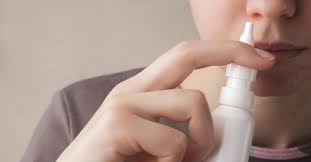
Nasal Decongestant Spray: Temporary Relief That Could Lead to Addiction
SadaNews - Many resort to nasal decongestant sprays to escape sleepless nights caused by colds and nasal congestion, but pharmacists warn that this quick fix could turn into a health trap that is difficult to escape from.
The accompanying medication leaflets for these sprays indicate the necessity of not using them for more than 7 consecutive days, but pharmacist Alexander Schmitz believes caution should begin even earlier, recommending stopping their use after just 4 to 5 days and replacing them with saline sprays based on seawater.
Schmitz attributes this warning to the nasal mucosa's ability to quickly adapt to the active decongestant substances that work to constrict the blood vessels in the nasal lining, which over time leads to the body becoming reliant on them.
He states, "At some point, the person can no longer breathe without the spray, making them ensure to carry it with them at all times."
The pharmacist confirms that he frequently encounters cases of individuals who are fully reliant on nasal sprays, noting that stopping their use is not easy, as the essential need to breathe complicates the matter.
Moreover, the harm of long-term use is not limited to dependence alone, as the excessive use of decongestant sprays leads to dryness of the nasal mucosa, increasing the risk of bleeding and raising susceptibility to infections due to reduced capacity of the nose to perform its natural protective functions.
As for ways to overcome this dependence, Schmitz clarifies that one common tip is to gradually transition to children's sprays that contain a lower concentration of the active substance, before later switching to seawater sprays that contain no medicinal substances at all.
However, this method does not succeed for everyone, especially for those who have been dependent on sprays for many years. In such cases, Schmitz advises seeking help from pharmacies, where the concentration of the spray can be gradually and very carefully reduced until the user eventually reaches the seawater spray only.
Schmitz concludes by emphasizing that seawater sprays do not carry the risk of dependence, as they are limited to moisturizing the mucosa, making them a safe long-term use option.
 Follow the latest Sada News via Google News
After Deschamps' Departure... Zinedine Zidane Tops the Candidates to Lead France

Mbappe Surpasses Messi and Becomes the All-Time Top Scorer in the World Cup

England Defeats France and Achieves Largest World Cup Achievement Since 1966

Messi Refused to Play for Spain and Missed 3 World Cups

Publishers Sue Google for Allegedly Using Books to Train Artificial Intelligence

Google Expands Capabilities of Google Search Console to Support Social Media Accounts

The Mediterranean Table... An Ancient Diet Revealing Its New Secrets for Health and Longev...
