

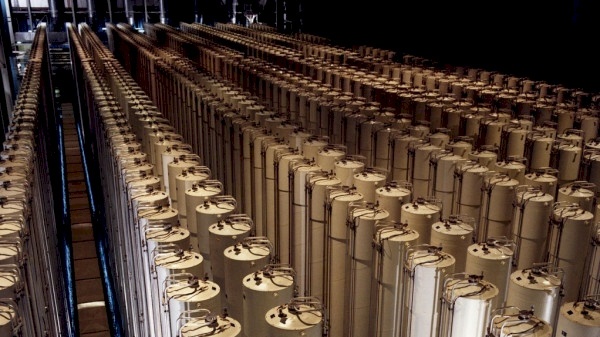
New York Times: Tehran Agreed to Abandon Enriched Uranium
SadaNews - The "New York Times" reported that U.S. officials stated Iran has agreed to abandon its stockpile of highly enriched uranium as part of the proposed agreement announced by U.S. President Donald Trump.
The officials clarified that the proposal has not yet finalized how Iran will relinquish this stockpile, with the resolution of these details postponed to upcoming talks.
U.S. officials indicated that Iran's commitment to give up highly enriched uranium is a key element of the agreement and a goal long sought by Washington, which is crucial to addressing any doubts expressed by Republicans in Congress.
According to American officials, Tehran initially refused to include any clause regarding its nuclear stockpile in the initial phase, demanding its postponement to the second phase. However, U.S. negotiators conveyed to Iran through intermediaries that they would withdraw and resume military operations if an agreement regarding the stockpile was not reached in the first part of the deal.
Recent planners in the U.S. military have presented Trump with options to strike the Iranian stockpile located at the "Isfahan" nuclear site, which was previously struck by "Tomahawk" missiles last June, temporarily burying the highly enriched uranium.
According to the newspaper, the military options proposed included striking the Isfahan site with bunker-busting bombs to destroy the underground stockpile. Trump also considered authorizing a joint raid by U.S.-Israeli commandos to recover the stockpile after Iran managed to access it following last summer's strikes, but he never approved this mission due to high risks and the potential for significant troop casualties.
Estimates from the International Atomic Energy Agency indicate that Iran currently possesses about 970 pounds of uranium enriched to 60%. Proposed options for disposing of this stockpile include either handing it over to Russia, similar to the agreement in 2015, or converting it to a non-military usable enrichment level. This will be discussed in the planned talks in the coming weeks or months, along with the duration of the enrichment freeze, which Washington aims to be for 20 years, while Tehran offers a much shorter timeframe.
On the financial front, any agreement would involve the release of billions of dollars of Iranian assets frozen abroad. U.S. officials confirmed that Iran would not be able to access the bulk of this money, which would be placed in a reconstruction fund by Washington and its allies, until a final nuclear agreement is reached, aiming to incentivize Iran to remain in negotiations.
 Follow the latest Sada News via Google News
CNN: Omani Proposal for Navigation in Hormuz Through Two Separate Corridors

Lebanon to Participate in Talks with Israel in Rome Next Week

"They held us at gunpoint with American rifles".. Settlers besiege American congressman in...

Axios: Possible Iranian-Omani Statement to Open the Middle Corridor in Hormuz to Ships

US Military Delegation in Lebanon to Discuss Mechanisms for Israel's Withdrawal from "Tria...

After Renewed Clashes.. Mediators Seek to Revive Diplomatic Path Between Washington and Te...

Mojtaba Khamenei Vows to Avenge His Father
