

Pakistani Army Chief Held "Highly Productive" Talks in Tehran
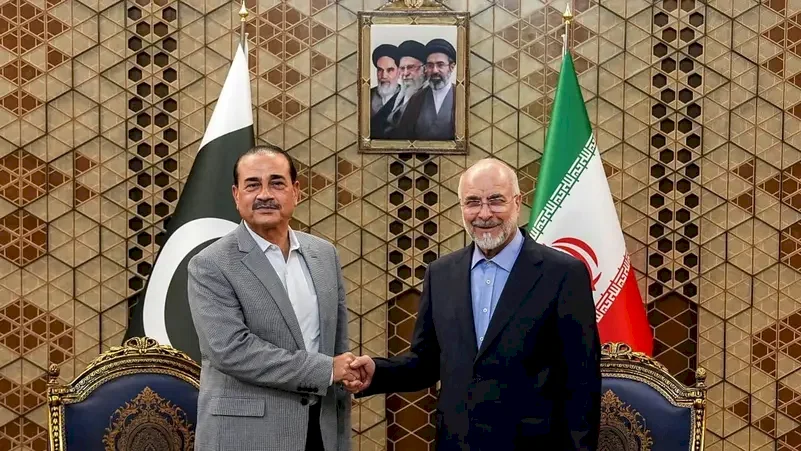
SadaNews - Following a visit to Tehran made by Pakistani Army Chief Asim Munir, whose country is mediating to end the war between Washington and Tehran, the Pakistani army announced today, Saturday, that Munir held highly productive talks with the Iranian president and other senior officials during his visit to Tehran, aimed at discussing ways to end the war with Iran.
It added in a statement that the negotiations that took place over the past twenty-four hours resulted in encouraging progress towards a final understanding.
It was also clarified that the discussions focused on accelerating the ongoing consultative process to support peace and stability in the region.
The army stated that Munir held high-level meetings with the Iranian leadership during his visit to Tehran, meeting with the Iranian president, the speaker of parliament, and the foreign and interior ministers.
"A Chance for Iranian Agreement"
This comes as U.S. Secretary of State Marco Rubio spoke about a "chance" for Iran to agree soon, even later on Saturday, to reach a deal with the United States to end the war.
Rubio told reporters during his visit to India, "There is a chance that we have something to say, whether that is later today, tomorrow, or in a few days," adding that he hopes for "good news."
He indicated that negotiations have made progress, without ruling out President Donald Trump resuming attacks on Iran.
Memorandum of Understanding
On the other hand, Iranian Foreign Ministry spokesperson Ismail Baqaei stated that his country is now "in the stage of finalizing" a framework agreement with the United States.
Baqaei said in statements to state television, "We are currently in the stage of finalizing the framework of understanding."
He also indicated that easing the U.S. maritime blockade is part of the proposed understanding with the United States, and Baqaei stated, "The issue of the Strait of Hormuz is among the matters being discussed" in this framework that is being worked on, adding, "But what is more important for us is to end the piracy conducted by the United States regarding routine maritime navigation."
Iran has closed the vital strait for global energy supplies and maritime shipping since the onset of the U.S.-Israeli attack on it on February 28. Consequently, Washington imposed a maritime blockade on Iranian ports starting in early April.
 Follow the latest Sada News via Google News
CNN: Omani Proposal for Navigation in Hormuz Through Two Separate Corridors

Lebanon to Participate in Talks with Israel in Rome Next Week

"They held us at gunpoint with American rifles".. Settlers besiege American congressman in...

Axios: Possible Iranian-Omani Statement to Open the Middle Corridor in Hormuz to Ships

US Military Delegation in Lebanon to Discuss Mechanisms for Israel's Withdrawal from "Tria...

After Renewed Clashes.. Mediators Seek to Revive Diplomatic Path Between Washington and Te...

Mojtaba Khamenei Vows to Avenge His Father
