

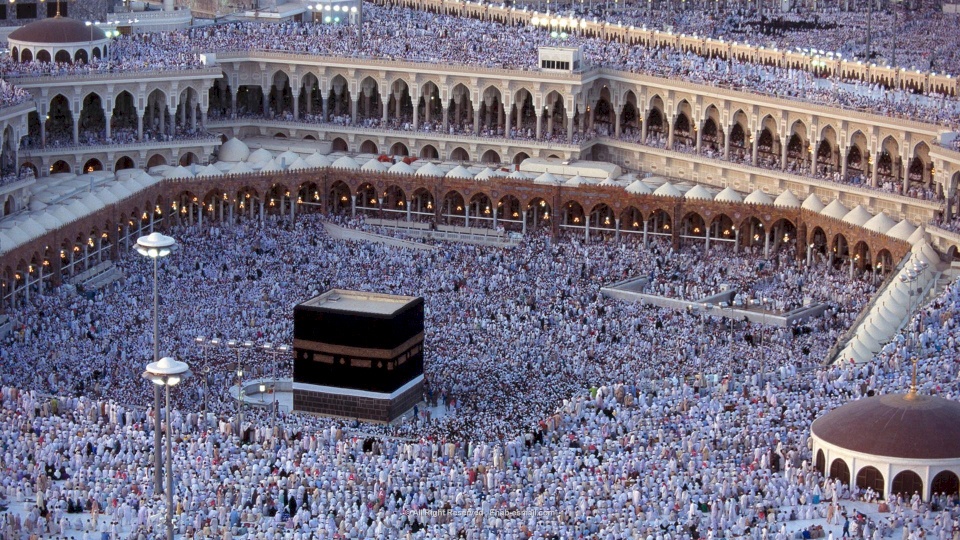
Saudi Arabia: We Will Not Allow Any Practices That Deviate Hajj from Its Intended Purposes
Sada News - Saudi Arabia emphasized that it will not allow the exploitation of the Hajj season for any practices that deviate it from its legitimate purposes. It noted the arrival of more than one and a half million pilgrims from abroad by Friday afternoon, the detection of 217 fraudulent campaigns across the country, and the return of about 366,000 violators.
This was stated during a press conference for the Hajj security forces' leadership at the Unified Security Operations Center (911) in the Makkah region, where they reviewed the security, traffic, and organizational plans for this year's season, along with relevant instructions and guidelines.
During the conference, General Mohammed Al-Bassami, the Director of Saudi Public Security, confirmed the readiness of the Hajj security system to carry out its tasks. He said: "Our goal is to ensure that the pilgrim reaches their destination, performs their rituals, and departs safely to their home country," urging the guests of Allah to focus on fulfilling their rites.
Al-Bassami explained that the crowd management plans focus on organizing flows, distributing densities, and minimizing overlaps between pathways as much as possible, noting that technology is an important factor that works alongside security personnel in the field to implement the regulations governing the Hajj with high professionalism, as well as to control fraudulent campaigns and violators.
He added that preparations are in place for various potential scenarios, based on risk assessments, with the execution of many hypotheses and field exercises aimed at testing the readiness of all security entities.
Al-Bassami revealed that over 217 fraudulent campaigns have been detected across Saudi Arabia, and 462 residents without legal permits were returned from the entrances to Makkah, along with 7,733 violators of residency, labor, and border security regulations during their attempts to enter the holy capital. Additionally, 140,975 vehicles were returned, and 366,000 vehicles were stopped at the entrances, including 9,654 vehicles used for unauthorized transport, and 217 transporters.
He pointed out that on-ground indicators and statistics have shown a noticeable improvement in compliance and adherence to regulations compared to last year, highlighting a 44% decrease in the number of arrests, deportations, and violators, a 12% decrease in fraudulent Hajj campaigns across Saudi Arabia, a 33% decrease in violators of residency, labor, and border security regulations, and a 93% decrease in violators among various visa holders remaining in Makkah.
Al-Bassami attributed the main factors contributing to this success up to now to regulations, their direct impact, and the severity of penalties, affirming that the achievements so far reflect the efficiency of the security system in managing the Hajj season, along with its continuous ability to develop its tools and enhance its field readiness by striking a balance between the strict application of regulations, optimal organizational work, a proactive approach in dealing with various challenges, leveraging modern technology, enhancing integration with all partners, and raising community awareness.
On his part, Major General Mohammed Al-Amri, the commander of Special Emergency Forces at the State Security Presidency, described their security plans as "integrative, proactive, and flexible," coordinating with various participating entities to achieve a unified goal of ensuring the safety and security of the pilgrims and facilitating their performance of rituals.
Al-Amri indicated the presence of special emergency forces in several vital locations, affirming their pivotal role in the holy sites by enhancing the security perimeter to prevent unauthorized access, in addition to their duties in Namirah Mosque for maintaining security inside, and on Mount Arafat for organizing and managing crowds, as well as their presence in Muzdalifah and Mina.
The commander of the Special Emergency Forces added: "At the Jamrat facility, a specialized force works to manage and operate the entire facility, organizing the flow of pilgrims through various axes, starting from the entrances to the facility until their exit, ensuring smooth movement and safety for all."
Additionally, Major General Dr. Hamoud Al-Faraj, the Director of Civil Defense, confirmed the integration of preparations and readiness for the Hajj season. He stated that the approved plans underwent intensive testing, including the implementation of field hypotheses to measure readiness and enhance coordination and integration among all entities, following a gradual operational approach that starts with basic tasks, escalating the response level in the event of any emergency.
Al-Faraj emphasized that the preventive aspect and public safety are a key focus in the Civil Defense's plans, starting from the moment the pilgrim arrives through Saudi entry points, moving to Medina, Makkah, and the holy sites, and extending to housing and transportation sites, ensuring all safety and prevention requirements are met in the locations frequented by the guests of Allah.
He pointed out the great interest that the "Civil Defense Directorate" gives to employing modern technologies and artificial intelligence, by utilizing sensors and early detection systems to monitor potential risks in vital locations, enhancing capabilities for proactive responses and quick action.
Moreover, the director of civil defense stated: "We trained all relevant entities serving the pilgrims on self-defense matters," indicating that volunteers are working alongside civil defense personnel in all tasks and operations.
In this context, Major General Dr. Saleh Al-Murabia, the acting Director General of Passports, reported that the "Passports" preparations for the season involve a comprehensive plan based on three main pillars aimed at providing the best services for the guests of Allah, enhancing smoothness, and supporting security and organizational integration.
Al-Murabia explained that all air, land, and sea entry points have been reinforced, including external points under the "Makkah Route" initiative, with qualified personnel from both genders capable of communicating in multiple languages, supported by the latest technologies, contributing to facilitating and expediting the entry procedures for pilgrims.
 Follow the latest Sada News via Google News
Mohammed bin Salman and Trump Discuss Cooperation Relations and Regional Developments Over...

Death Toll from Venezuela Earthquakes Exceeds Four Thousand

North Korea: Senior Military Official Removed from Ruling Party Over Corruption Allegation...

Six Injured in Russian Attack on Ukrainian Capital Kyiv

US Treasury Department Issues New Sanctions Related to Iran

Eight People Charged with Planning Attack on the White House to Assassinate Trump, Vance,...

American Official: We Will Oversee Israel's Withdrawal from "Experimental Areas" in Lebano...
