

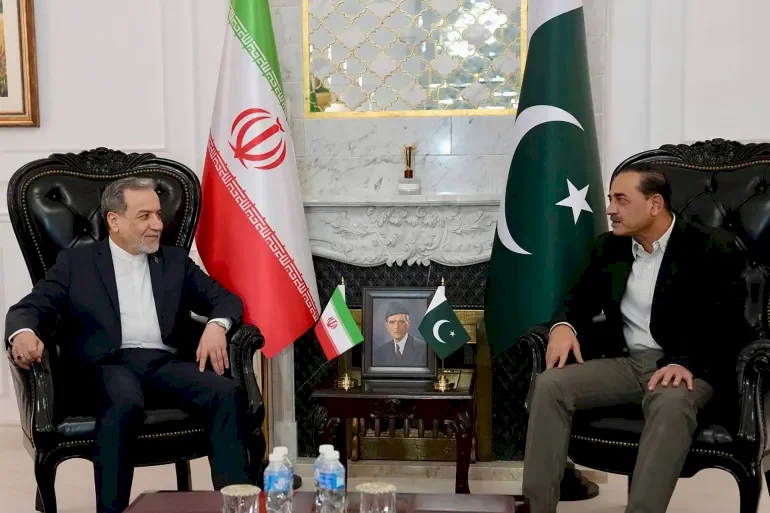
Anticipation for the Results of the Pakistani Army Chief's Visit to Tehran
SadaNews - The U.S. administration has expressed hope for progress in negotiations with Iran to end the war, coinciding with the anticipated visit of Pakistani Army Chief Asim Munir to Tehran, as part of efforts to mediate between the two sides after previous rounds of talks have stalled.
This follows warnings issued by U.S. President Donald Trump, who stated that negotiations with Iran have reached a "crossroads" between reaching an agreement or returning to military escalation, while tensions continue despite a ceasefire that has been in effect since April 8.
U.S. Secretary of State Marco Rubio stated on Thursday that the Pakistani side "will head to Tehran," expressing hope that "this will contribute to moving things forward." His remarks came after Iranian media reported on the anticipated visit of Munir to complete "dialogues and consultations," without official confirmation from Islamabad.
Pakistan hosted a round of direct negotiations in April between U.S. and Iranian officials, which was the only one since the outbreak of war on February 28, in which Munir played a prominent role in managing communications between the two sides.
However, that round ended without an agreement, after Tehran accused Washington of putting forth "excessive" demands, while subsequent communications and exchanges of proposals continued amid ongoing fears of a breakdown of the ceasefire and a resurgence of war.
Trump stated on Wednesday that matters "are exactly at a crossroads," adding: "If we don’t get the right answers, things will go wrong very quickly," affirming that Washington wants "100% complete answers."
In contrast, the Iranian Speaker of Parliament, Mohammad Baqer Qalibaf, warned that the United States "has not abandoned its military objectives," despite economic and political pressures, deeming U.S. actions as indicative of a desire to resume war, vowing a "strong response" if Iran is faced with a new attack.
Additionally, Iranian Foreign Ministry spokesperson Ismail Baqei announced that Tehran is reviewing new U.S. proposals, reiterating calls for the release of frozen Iranian assets and the lifting of the U.S. maritime blockade imposed on Iranian ports.
Despite the ceasefire, the Strait of Hormuz remains one of the main points of contention between the two sides, amid ongoing Iranian restrictions on navigation, keeping global energy markets under continuous pressure.
During the war, Iran imposed restrictions on transit through the strait, allowing only a limited number of vessels from what it deemed "friendly" countries, while implementing a special transit fee system.
Approximately one-fifth of the world's oil and liquefied natural gas exports, along with nearly one-third of global fertilizer shipments, pass through the strait, raising increasing concerns about widespread economic and food repercussions if the closure persists for an extended period.
The new Iranian authority overseeing the strait has announced that its control now extends to waters south of the UAE's Fujairah port, clarifying that any crossing now requires "prior coordination and obtaining permission."
This has provoked an Emirati objection, with the UAE President's advisor, Anwar Gargash, describing these Iranian ambitions as "wild dreams."
The United Nations Food and Agriculture Organization (FAO) has also warned that the continued closure of the strait could lead to a "structural shock" in the global food sector in the coming months.
 Follow the latest Sada News via Google News
CNN: Omani Proposal for Navigation in Hormuz Through Two Separate Corridors

Lebanon to Participate in Talks with Israel in Rome Next Week

"They held us at gunpoint with American rifles".. Settlers besiege American congressman in...

Axios: Possible Iranian-Omani Statement to Open the Middle Corridor in Hormuz to Ships

US Military Delegation in Lebanon to Discuss Mechanisms for Israel's Withdrawal from "Tria...

After Renewed Clashes.. Mediators Seek to Revive Diplomatic Path Between Washington and Te...

Mojtaba Khamenei Vows to Avenge His Father
