

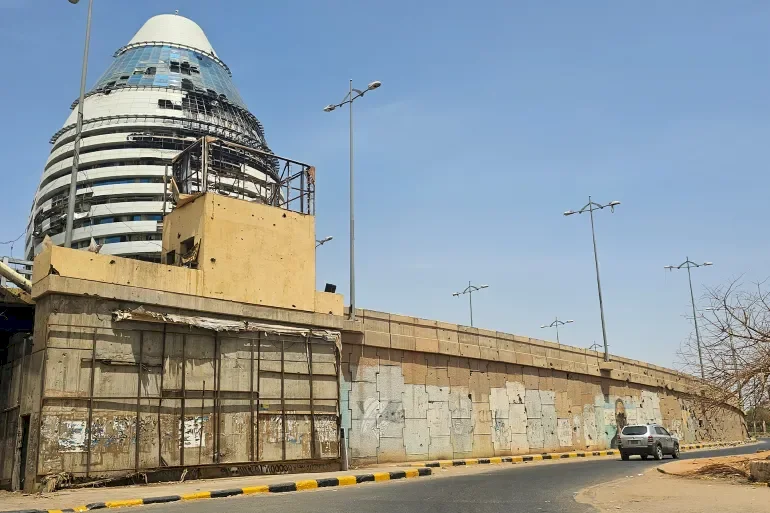
The Return of State Institutions to Khartoum: Has the Capital Reclaimed Its Role?
SadaNews - After months of managing the country from the city of Port Sudan, the Sudanese government announced the completion of the return of ministries and sovereign and national state institutions to Khartoum, thereby closing the chapter on the administrative transition imposed by the conditions of war between the army and the Rapid Support Forces since April 2023.
This return has occurred - according to observers - in a gradual and studied manner, reinstating the decision-making center to the historical capital and alleviating the crisis of administrative legitimacy that accompanied the period of work from Port Sudan in the east of the country.
As the executive and security apparatus stabilizes in its main locations, questions arise about the ability of this step to restore life to normal, and whether Khartoum can reclaim its role as a symbol of sovereignty and decision-making in light of the challenges of reconstruction and rebuilding trust.
Continuous Efforts
Among the prominent institutions that embodied this return is the General Authority for Radio and Television, where the director of the television sector, Walid Mustafa, stated that the institution was one of the first entities targeted during the war due to its importance in shaping public opinion.
He pointed out that after the Sudanese army took control of the capital in May 2025, work commenced from scratch by bringing in new operating devices and equipment, and starting the rehabilitation of studios despite the extent of the destruction and challenges. He added - in an interview with Al Jazeera Net - that the return of television broadcasting from Khartoum is directly linked to the return of the government to its premises, which he considers indicative of political and security stability.
He emphasized that the significance of live broadcasts lies in conveying the realities of daily life and broadcasting reassuring messages to citizens, noting that the return of television has helped encourage them to return to the capital, coinciding with the reopening of markets and institutions, allowing Khartoum to gradually regain its image as a symbol of sovereignty and a center for decision-making.
Concurrently, the security dimension emerged with the return of the Ministry of Interior to Khartoum as the first federal ministry to resume its activities from there.
In his statement to Al Jazeera Net, the official spokesperson for the police, Brigadier General Fath al-Rahman Mohamed al-Toum, confirmed that the Interior was the first ministry to return to Khartoum and contributed to facilitating the return of other ministries within a security plan aimed at securing the capital through coordination between security agencies and activating the slogan "security is everyone's responsibility."
He clarified that the Ministry of Interior intensified its efforts through its various committees to eliminate negative phenomena and recover looted items, as well as expanding police presence to cover 103 stations and 400 checkpoints to secure neighborhoods. He added that it oversaw the security of 350 institutions within Khartoum, including 149 sites for embassies and diplomatic missions, in a move aimed at preparing the capital to welcome these missions again.
Comprehensive Return
The security plan - according to Brigadier General Mohamed al-Toum - also relied on modern technologies, through the operation of drones and surveillance cameras, reflecting a new approach towards employing technology in maintaining security and establishing stability.
The return to Khartoum was not limited to the General Authority for Radio and Television and the Ministry of Interior, but also included other federal ministries and sovereign and national state institutions that gradually resumed their activities from the capital.
This integrated scene, which combined media, security, and administration, brought Khartoum back to the forefront of national decision-making and added significant political and social momentum to the internal arena. With the simultaneous return of institutions with the reopening of markets and the return of citizens, it seemed that the capital was gradually regaining its sovereign image.
However, this momentum, accompanied by reassuring messages to citizens and tightened security measures, raises fears of threats from the Rapid Support Forces re-emerging, as the restoration of Khartoum in this manner represents a direct challenge to their political and military project.
Positive Momentum
For his part, political expert and analyst Khaled al-Faki believes that the completion of the return of sovereign and service institutions has given life in the capital a kind of positive momentum, considering this return as a manifestation of normal life.
He told Al Jazeera Net that the capital has regained its breath, exhausted among the ruins of war, thanks to the will of the Sudanese people, who break fear day after day, and that "while Khartoum still desperately needs to bolster essential services and rehabilitate them further."
Regarding the ongoing threats from the Rapid Support Forces to return to the capital, Faki explained the strategic and psychological dimensions behind this rhetoric, attributing them to the following reasons:
Central core reasons: Khartoum is the central capital of the country, and any targeting of it represents an attempt to create widespread chaos, which is the alternative goal of the Rapid Support Forces after they failed militarily and were forced to leave their premises.
Psychological warfare and disruption of life: The Rapid Support Forces seek, through their threats and intermittent shelling, to disrupt vital services, such as water stations, electricity, and Khartoum Airport, in an attempt to instill fear and create psychological warfare aimed at generating internal instability that prevents the citizens and institutions from stabilizing.
Dissolution of ambition and internal divisions: Faki sees that the Rapid Support Forces' dream of control has dissolved, as while its forces initially controlled strategic positions like the presidential palace at the start of the war, they later failed to maintain them, resulting in sharp divisions within their ranks with every military advance of the Sudanese army in various combat fronts.
He describes the return of the Rapid Support Forces to Khartoum as a type of fantasy, adding that the capital has definitively turned the page on the war, shaken off the dust of conflict, and has practically begun the journey of reclaiming its identity as the "beating heart of Sudan."
Source: Al Jazeera
 Follow the latest Sada News via Google News
Mohammed bin Salman and Trump Discuss Cooperation Relations and Regional Developments Over...

Death Toll from Venezuela Earthquakes Exceeds Four Thousand

North Korea: Senior Military Official Removed from Ruling Party Over Corruption Allegation...

Six Injured in Russian Attack on Ukrainian Capital Kyiv

US Treasury Department Issues New Sanctions Related to Iran

Eight People Charged with Planning Attack on the White House to Assassinate Trump, Vance,...

American Official: We Will Oversee Israel's Withdrawal from "Experimental Areas" in Lebano...
