

Malaria Epidemic Sweeps Yemen.. 64% of the Population at Risk of Infection
SadaNews - Far from the frontlines and amidst a war that has not yet ended, Yemenis face another battle that is no less fierce; concerns are escalating and fears intensifying after the World Health Organization sounded the alarm warning of a malaria outbreak in the country.
According to Anis Al-Askari, spokesperson for the Ministry of Health in the Yemeni capital, Sanaa, epidemiological surveillance data for 2025 revealed 116,000 confirmed cases of malaria, with a total of 1,259 severe cases reported in hospitals, among which 11 deaths were recorded.
Doctors warn that malaria, although it affects all age groups, poses the greatest threat to children under five years old. The disease, transmitted by "Anopheles" mosquitoes, can lead to severe and fatal complications, the most prominent of which are encephalitis and entering into a coma.
The organization emphasized that combating this disease requires enhancing preventive interventions and boosting the readiness of the overburdened health system, amid fears of the spread of the disease widening throughout this year.
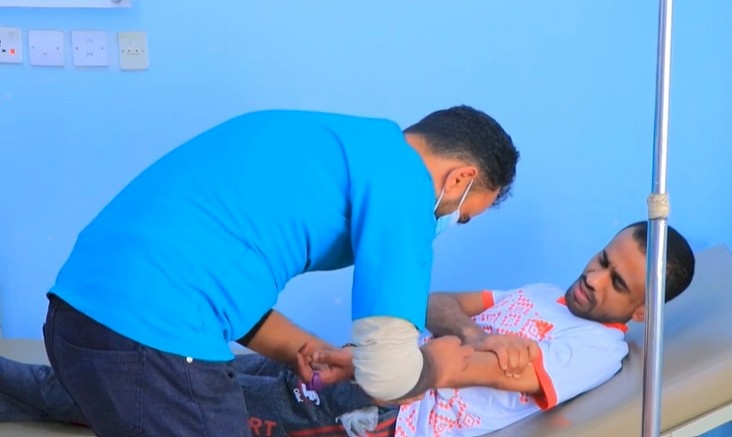
Scenes from inside Al-Wahda Hospital in Marib City in eastern Yemen show patient Muhammad Al-Asali lying under medical care for several days.
The epidemic nearly claimed Al-Asali's life, but doctors managed to rescue him at the last moment before it was too late. He describes his suffering with the epidemic as a "very exhausting disease" that deprived him of the ability to eat and sleep normally.
Al-Asali's suffering is not isolated, as statistics from the World Health Organization indicate that about 64% of Yemen's population lives in areas at high risk of malaria spread. Last year, nearly 1.5 million people underwent medical testing.
This epidemic outbreak doubles the burden on an already strained health sector, where the repercussions of the war have led to around 60% of health facilities being entirely or partially out of service, making hospital corridors narrow with patients, at a time when around 20 million Yemenis lack the most basic healthcare provisions, according to the report.
What exacerbates the situation is the expanding map of malaria spread, now impacting even areas previously classified as low spread. Several environmental and living factors contribute to this expansion, starting from overcrowding in displacement camps and the prevalence of sewage ponds, to the summer weather with its rain and oppressive humidity, placing pregnant women and children under five in the eye of this epidemic storm.
In a country where one illness recedes only for another to emerge, the malaria outbreak puts Yemen in a critically precarious situation. The World Health Organization renews its warnings that any delay in health interventions could put the lives of thousands at serious risk, further darkening the scene in a country facing one of the world's most complex humanitarian crises.
Yemen faces one of the worst economic and humanitarian crises in the world, amid the continuation of a fragile truce between the government and the Houthis since April 2022, and the deterioration of financial and service conditions in the country.
Source: Al Jazeera
 Follow the latest Sada News via Google News
Mohammed bin Salman and Trump Discuss Cooperation Relations and Regional Developments Over...

Death Toll from Venezuela Earthquakes Exceeds Four Thousand

North Korea: Senior Military Official Removed from Ruling Party Over Corruption Allegation...

Six Injured in Russian Attack on Ukrainian Capital Kyiv

US Treasury Department Issues New Sanctions Related to Iran

Eight People Charged with Planning Attack on the White House to Assassinate Trump, Vance,...

American Official: We Will Oversee Israel's Withdrawal from "Experimental Areas" in Lebano...
