

Destruction Unveiled: Report Shows the Scale and Scope of U.S.-Israeli Strikes on Iran
SadaNews - Following weeks of unprecedented military escalation, the extensive damage left by U.S.-Israeli strikes inside Iran is gradually being revealed, amid strict restrictions on the flow of information from within the country.
While these restrictions have limited direct assessment capabilities, remote sensing technologies and satellite imagery have provided an important window into understanding the scale and spread of the destruction, revealing a complex scene ranging from military targets to the depths of urban areas.
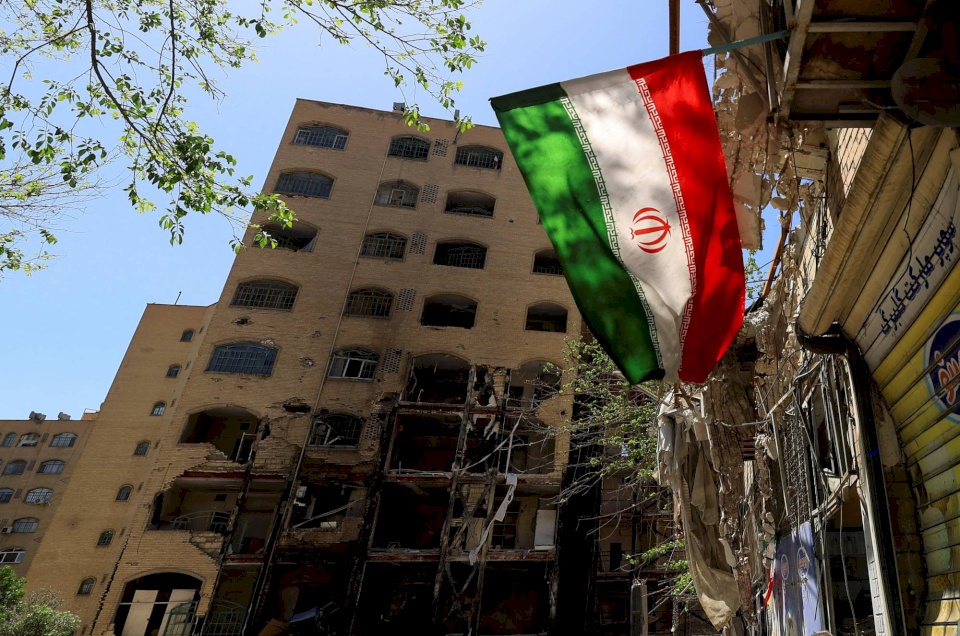
After more than five weeks of fighting, a fragile 14-day truce between the United States, Israel, and Iran allowed residents of Tehran an initial opportunity to assess the extent of the losses. The city, home to approximately 9 million residents, shows clear signs of destruction, from scattered debris and damaged high-rise buildings as a result of airstrikes, according to a report from Bloomberg.
The human and material costs of the conflict have been staggering, with at least 3,300 Iranians killed, including civilians and military personnel, while extensive areas of the country have suffered significant damage.
The restrictions imposed by Iranian authorities on photography and the internet, alongside U.S. restrictions on the release of high-resolution satellite images, have hindered comprehensive visual assessment of the damage. However, a study conducted by conflict ecology researchers at Oregon State University, based on radar imagery, estimated that at least 7,645 buildings across Iran have been damaged or destroyed, including 60 educational facilities and 12 health facilities, during the period from February 28 to April 8.
Bloomberg also analyzed land use in the affected areas within Tehran, concluding that 2,816 buildings were damaged, distributed as follows: approximately 32% related to the military sector, 25% industrial, 21% civilian, 19% commercial, and 2% governmental.
In this context, Nazanin Shahrookni, an associate professor at the School of International Studies at Simon Fraser University in Canada, explained that destruction in major cities does not typically present itself as a single clear focal point, stating: "In a city of this size, destruction does not take on a concentrated form, and it is practically difficult to draw a clear dividing line between military targets and civilian life, as the impact of the strikes spreads throughout an interconnected urban fabric."
Tehran is a sprawling city comparable in size to New York City, extending from its overcrowded southern neighborhoods to the foothills of the Alborz Mountains to the north, where the wealthier areas are situated in a less polluted environment with a more temperate climate.
The neighborhoods of the city are characterized by mixed uses, combining residential buildings with commercial centers, stores, banks, and government offices. Despite the presence of parks and green spaces, they are insufficient to alleviate the burdens of severe traffic congestion amid around 16 million vehicles on the road network.
While the attacks have targeted multiple regions in Iran, including the city of Isfahan, an important cultural and industrial hub, Tehran has been the most affected, with centers of destruction scattered throughout it, even if some other areas remained relatively sheltered from strikes.
Both the United States and Israel announced that they carried out precise targeting operations and focused assassinations against military and security sites, accusing the "Revolutionary Guard" - which dominates vital sectors including defense, construction, and energy - of being located within civilian areas.
However, Shahrookni warned that such discourse may oversimplify the reality of war, clarifying: "Terms like (precision strikes) are often used to depict operations as limited and clean, but this language obscures the real effects of war, especially in crowded urban environments."
In contrast, the White House spokesperson confirmed that military operations had achieved their objectives, noting that the "Department of Defense has accomplished all specified goals within Operation Epic Fury, including the destruction of Iranian ballistic missiles and their production facilities, and weakening its naval capabilities and proxies." She added that U.S. forces have carried out around 13,000 strikes since operations commenced, emphasizing that the U.S. "does not target civilians."
These developments come amid a crippling economic crisis facing Iran, exacerbated by U.S. sanctions related to the uranium enrichment program, human rights issues, and regional security concerns, which contributed to public protests weeks before the war.
The extensive bombing campaign - which Trump threatened would send Iran back to the "Stone Age" - is likely to further exacerbate these conditions.
In this regard, Nathalie Moussin, head of the Institute of Architecture and Technology at the Royal Danish Academy in Copenhagen, stated that this level of destruction is "shocking, but not surprising" given the nature of the bombing, explaining that the damage extends beyond immediate targets to exacerbate existing challenges in the urban environment.
The Iranian government had estimated last week that the direct and indirect damages resulting from the airstrikes amount to about $270 billion, a figure close to the International Monetary Fund's projections of Iran’s GDP for 2026, which is approximately $300 billion. The fund also expects inflation rates to exceed 70 percent, reaching a record high for the country.
In a related context, several business owners - who preferred to remain anonymous - reported that many private sector institutions, which are a primary source of income for many families, have ceased operations or are operating at limited capacity.
The Tehran Municipality announced that more than 39,000 housing units have been severely damaged since the bombing began.
In conclusion, Hadi Kahhalzadeh, a researcher at the Quincy Institute and a center for global development and sustainability at Brandeis University, warned that the sharp rise in unemployment and inflation rates could drive millions of Iranians into poverty in the upcoming period.
 Follow the latest Sada News via Google News
Funeral Ceremonies for Ali Khamenei Begin

US Air Force intends to investigate officer who called for Trump's removal

Venezuela: Death Toll from the Earthquakes Rises to 2,595

Algeria: The initial voter turnout in the legislative elections reached 20.79%

Russian Attacks Claim Two Lives and Injure Eight Overnight in Ukraine

Trump: Iran Agreed to Everything We Want on the Nuclear File and It’s Ridiculous to Contin...

Casualties in Explosion in Damascus
