

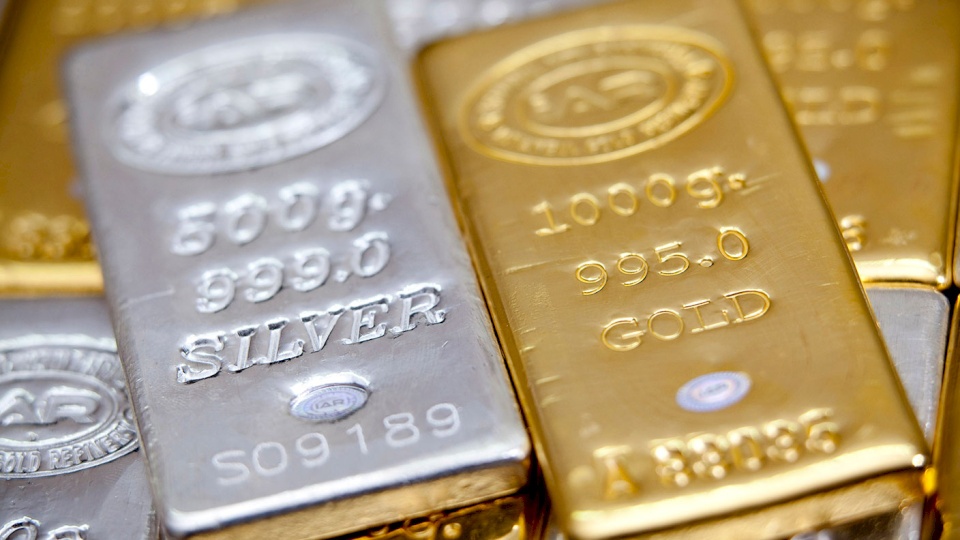
Fluctuations in Gold Prices Amid Stalled Talks with Iran and High Interest Rate Concerns
SadaNews - Gold has declined following the stalling of efforts to resume peace talks between the United States and Iran, and the ongoing disruption of energy flows through the Strait of Hormuz, after a month of war that has shaken global markets and raised inflation risks.
The precious metal fell by as much as 0.8% to approach $4,718 per ounce, continuing a decline of 2.5% from the previous week, before reducing its losses after Axios reported that Iran had presented a new proposal to Washington to reopen the Strait of Hormuz.
U.S. President Donald Trump canceled a planned trip for his top envoys to resume peace talks with Iran in Islamabad, while Tehran stated it would not negotiate as long as it remains under threat.
Oil prices also rose on Monday, with the Strait of Hormuz remaining nearly impassable due to the blockade imposed by the countries.
The energy supply shock caused by the war has increased inflation risks, bolstering the likelihood that central banks will keep interest rates unchanged for a longer period or even raise them, which places pressure on gold that does not yield returns. Gold has lost about 11% since the outbreak of the conflict at the end of February.
Market Assessments and Gold's Trajectory
Nikki Sheils, head of research and precious metals strategy at MKS PAMP SA, wrote in a note that gold is "in a technical foggy area."
She added that "confidence is weak, large investments remain on the sidelines, actual demand is varied, and perhaps the word 'lost' is the most appropriate to describe the market's current status."
Traders are assessing the Federal Reserve's path regarding borrowing costs, after U.S. Attorney General Janine Pirro said on Friday that she would drop an investigation into oversights regarding costs at the U.S. central bank, paving the way for Trump to choose Kevin Warsh to become the next Fed chair.
Investors do not expect Warsh to deliver sharp interest rate cuts as the president has called for, but rather to adopt a measured approach with gradual steps to lower them.
Impact of Hormuz Closure on Energy Markets
In the Middle East, the actual closure of the Strait of Hormuz has disrupted about a fifth of global oil flows.
The fragile ceasefire has largely held over the weekend, but Trump has asked his envoys Jared Kushner and Steve Wietcov to cancel their trip to Pakistan, which is mediating the talks. Iranian President Masoud Bezhakian stated that his country would not enter into "negotiations imposed under threat or siege."
Axios reported on Monday that Iran proposed a new plan to reopen the Strait of Hormuz, postponing talks on the nuclear program to a later stage.
Sheils indicated that "markets have adjusted to news indicating sometimes a ceasefire failure and sometimes its resilience," adding: "As gold now turns into a high-risk asset, negatively correlated with oil, and weakly positively correlated with stocks but not an accurate indicator of either, demand to buy it below $5,000 is extremely weak."
Meanwhile, the Azerbaijani State Oil Fund sold about 22 tons of gold in the first quarter of the year after reaching a record peak in late January, pushing the fund's gold allocations to the maximum permitted limit.
These sales, valued at over $3 billion at current prices, mark the first time the fund has reduced its reserves since it began buying gold in 2012.
Both platinum and palladium also fell, and the Bloomberg Spot Dollar Index, which measures the performance of the U.S. currency, decreased by 0.1% after rising by 0.3% last week.
Silver Price
Silver prices were also recorded close to $76 per ounce.
 Follow the latest Sada News via Google News
Gold Heads for First Weekly Increase in 5 Weeks

Wall Street Banks Intensify Hiring in the Gulf to Keep Up with "War Deals"

Oil Continues to Decline with Increased Flows through Hormuz and Progress in Iran Talks

Gold Recovers After Waller's Speech and Easing Tension Over U.S. Rate Hike

Aluminum Prices Drop to Lowest Level Since February Amid Dollar Strength

Bitcoin Drops Below $60,000
World Gold Council: The second half of 2026 is a critical turning point for gold prices
