

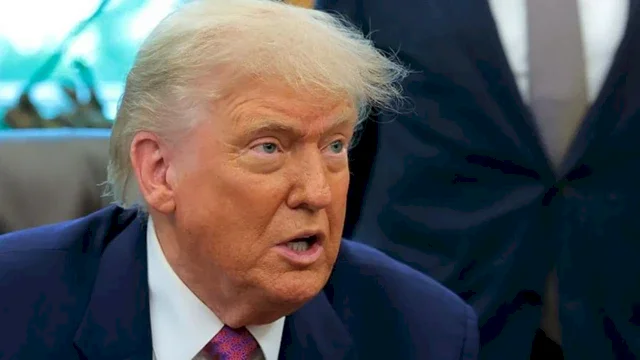
"Trump" Raises Minimum Reciprocal Tariffs to 15%
SadaNews - President Donald Trump announced that he would not impose tariffs lower than 15% as part of what he described as "reciprocal" rates, a move indicating that the minimum tariffs imposed under his new trade campaign are on the rise.
Trump said during an artificial intelligence summit in Washington on Wednesday: "We will impose simple and direct tariffs ranging from 15% to 50%. In some cases, we will reach 50% because our relationship with some of these countries has not been very good."
Trump's announcement that tariffs will start at 15% represents the latest shift in his efforts to impose levies on most of the United States' trading partners, and an additional indication of his increasing desire to expand these tariffs to include exports from countries that have not yet entered into trade agreements with Washington.
Escalation of the Unilateral Approach and Reduction of Negotiation Space
Earlier this month, Trump stated that more than 150 countries would receive a message indicating a tariff rate of "maybe 10 or 15%, we haven’t decided yet". Meanwhile, Commerce Secretary Howard Lutnick told CBS News on Sunday that smaller countries, including "Latin American countries, Caribbean nations, and many African countries", would be subject to a basic 10% tariff.
It is worth noting that Trump announced last April the imposition of a comprehensive 10% tariff on the majority of countries, marking a preliminary launch of the new wave of tariffs.
Although the president and his advisors had previously expressed a desire to enter into a series of trade agreements, Trump has increasingly referred to the "tariff messages" themselves as "deals", emphasizing his unwillingness to engage in lengthy negotiations.
Nonetheless, he has left the door open for countries that show willingness to cooperate in reaching agreements that reduce the tariffs imposed on them.
Moderated Deal with Japan and European Anticipation
On Tuesday, Trump announced the reduction of tariffs on Japan from 25% to 15%, in exchange for Tokyo removing restrictions on some American products and contributing to a $550 billion investment fund.
In contrast, other countries such as South Korea, India, and the European Union are still seeking to reach an agreement before the high tariffs take effect.
In remarks on Wednesday, Trump stated that he would implement "very simple tariffs for some countries", clarifying that the number of affected countries is so large that it does not allow negotiation with everyone. He also confirmed that talks with the European Union are "serious".
He concluded by saying: "If the European Union agrees to open its markets to American companies, we will allow it to pay lower tariffs."
 Follow the latest Sada News via Google News
Soaring Oil Prices Burn the Pockets of the Palestinian Citizen "The Poor"

Millions of Dollars in Losses.. "SadaNews" Reveals Shocking Figures for Traders from Pales...

The Problem of Shekel Overcrowding Worsens.. Fuel Station Owners Threatened with Closure o...

The Palestinian Economy at a Crossroads: 4 Files Awaiting Resolution
Fuel Crisis in the West Bank: Supply Disruption or Liquidity Shortage?

Government Contact Center Issues Clarifying Statement Regarding the Establishment of a Gov...

Exchange Rates of Currencies Against the Shekel Today, Wednesday (July 22)..
