

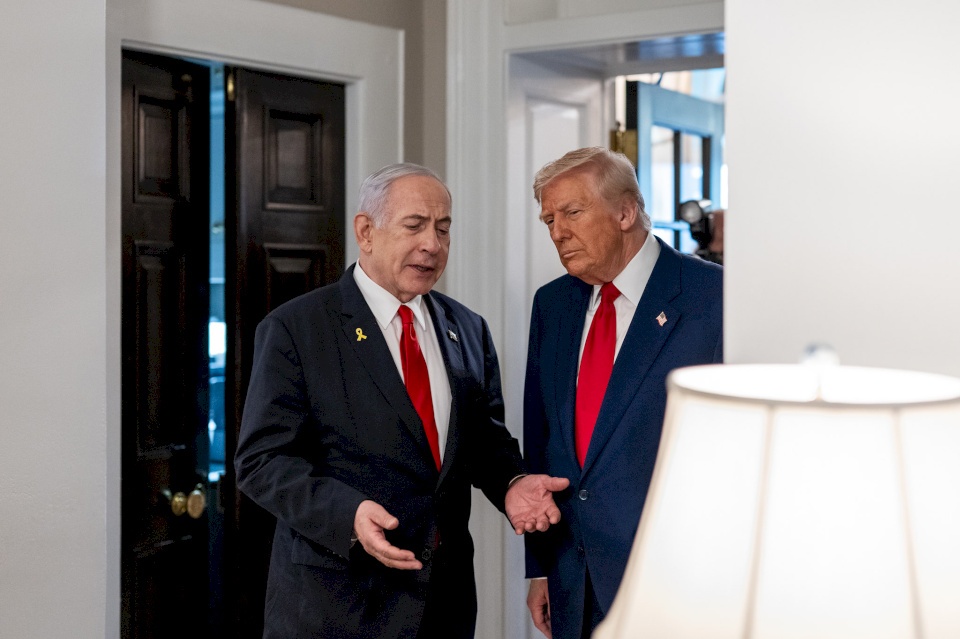
Will Israel Succeed in Dragging Trump to Strike Iran?
SadaNews: In tandem with the ongoing tug-of-war over the future of the war on Iran, Israel is experiencing a state of extreme security and military mobilization, closely monitoring the outcome of talks underway between Washington and Tehran, according to a statement from an Israeli official reported by CNN.
The network pointed out, citing the Israeli official - whose identity was not disclosed - that there is rising concern in Israel that US President Donald Trump might settle for a "bad deal" with Tehran.
According to other sources, the network reported that Israel would consider the war on Iran "incomplete" if an agreement is reached that leaves Iran's nuclear program partially intact and ignores issues related to ballistic missiles and support for its regional allies.
Before his visit to China, on Wednesday and Thursday, Trump stated that Washington is aiming only for a "good deal" with Iran, emphasizing his rejection of Tehran having nuclear weapons.
What are Israel's Concerns?
Sources reported that Israel feels tension over the possibility of reaching an agreement with Iran before addressing some key issues that led Washington and Tel Aviv to launch a second war on Iran on February 28, primarily uranium enrichment and the ballistic missile system. The two sides had bombed Iranian nuclear reactors during the first round of military confrontation in June 2025.
The American-Israeli war on Iran lasted about 40 days, and then on April 7, Washington and Tehran reached an indefinite temporary ceasefire through Pakistani mediation, while ongoing negotiations have led to further divergence of views.
According to what CNN reported, Israeli concerns stem from speculations in Tel Aviv that the issues of Iran's ballistic missiles and its support for regional allies "have been taken off the negotiation table".
Israel does not hide its intense desire to resume the war on Iran, despite facing losses in lives and infrastructure due to Iranian bombing during the last war.
In this regard, CNN cited an Israeli official saying, "We would be happy if no agreement is reached between the United States and Iran, if the blockade on the Strait of Hormuz continues, and if Iran receives a few additional strikes."
In an interview with CBS News' "60 Minutes" program aired last Sunday, Israeli Prime Minister Benjamin Netanyahu acknowledged that the war had not achieved its full goals yet, stressing that the threat posed by Iran's regional allies and its ballistic missile program remains.
Netanyahu stated that Israel has succeeded in weakening a significant portion of those capabilities "but there is still much to be done," reflecting his desire to drag US President Donald Trump into a new war against Iran.
What Alternatives are Proposed Against Iran?
An informed source told CNN that the US and Israel have continued to coordinate on potential military plans concerning Iran, which include striking energy facilities, infrastructure, and assassination operations if the talks fail.
NBC News reported that a US official stated that Trump is considering several options to reopen the Strait of Hormuz and break the Iranian blockade, but confirmed that Trump has not issued orders to resume large-scale combat operations.
This comes amidst divisions within the Trump administration on how to deal with Iran in the next stage, between a team calling for intensified pressure on Tehran including targeted strikes to strengthen Washington's position at the negotiating table, and another team holding on to the diplomatic option to give the negotiation path another chance, according to a report published by CNN yesterday.
The US military is considering renaming the war with Iran as "Operation Heavy Hammer" if the current ceasefire collapses and Trump decides to resume combat operations, according to NBC, citing US officials.
This follows Iran's recent rejection of the US proposal during the ongoing negotiations mediated by Pakistan in an effort to end the war permanently, a response that angered Trump, stating it is "absolutely unacceptable".
What is Iran's Position on the Escalation?
Iran's response focused on establishing an end to the war in various arenas, especially Lebanon, also including demands for reparations for the losses inflicted by the conflict, while emphasizing Tehran's insistence on its sovereignty over the Strait of Hormuz.
Iran also called on the United States to lift the naval blockade imposed on the strait and Iranian ports, provide guarantees against new attacks, as well as lift economic sanctions and end US restrictions on Iranian oil exports.
Trump has stated that the Iranian stance undermines the ceasefire agreement that has been in effect since April 7, threatening the possibility of returning to military options against Tehran, a direction that Israel is pushing for strongly.
In contrast, the Iranian front appears determined to withstand the mightiest military forces, as Parliament Speaker Mohammad Baqer Qalibaf recently affirmed the readiness of the Revolutionary Guards to respond "firmly and decisively" to any new hostile move.
 Follow the latest Sada News via Google News
France Studies Imposing Sanctions on Settlers Involved in Violence Against Palestinians

New York Times: Israel's Espionage on US-Iran Negotiations Exceeded Boundaries

Sources to "SadaNews": The New Revolutionary Council of Fatah Will Hold Its First Meeting...

Pakistan's Interior Minister in Tehran.. Bearing a Message for Khamenei

6 Palestinians Martyred in Israeli Shelling of Al-Rimal Neighborhood in Western Gaza

Tehran: Washington Bears Responsibility for Any Escalation and Illegal Actions

"Finance" and "Health": We are working diligently to finalize urgent arrangements for the...
