

Myanmar: Staged Elections Amid Civil War and International Criticism
SadaNews - Polling centers in Myanmar (Burma) opened their doors to voters on Sunday morning for the first phase of the first legislative elections the country has seen in nearly five years, which the ruling military council describes as a step towards returning to democracy, despite the ongoing civil war in most regions.
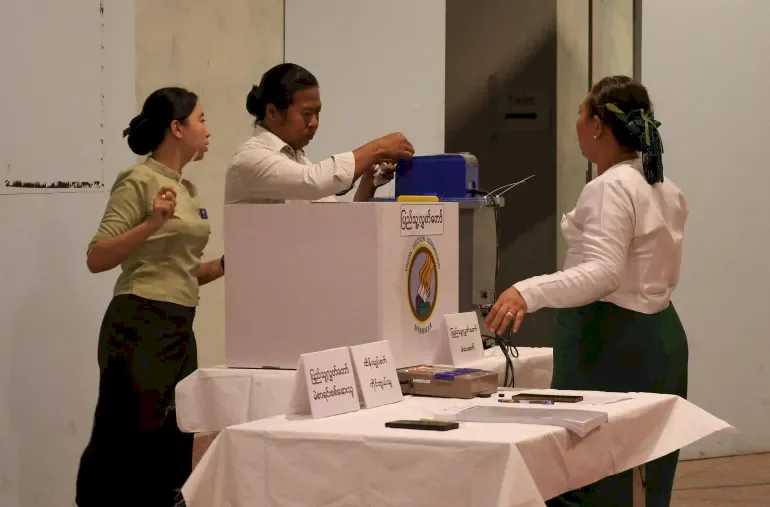
The first round of three began at 6 AM local time, covering constituencies in the cities of Yangon, Mandalay, and the capital, Naypyidaw. Polling centers, under tight security measures, witnessed a modest turnout from voters.
The elections are being conducted in phases extending over a month, amid widespread criticism from activists, Western diplomats, and the United Nations High Commissioner for Human Rights, who consider the process lacking in integrity due to the extensive oppression of the opposition and the existence of electoral lists that include candidates close to the military.
The military-aligned Union Solidarity and Development Party is expected to secure the largest number of seats, which critics view as an attempt to provide a new civilian facade to military rule.
Areas under the control of rebels were excluded from the voting process in the Southeast Asian nation, which has a population of approximately 50 million.
In the city of Yangon, security forces imposed strict guard measures at polling centers, with armed soldiers deployed in the vicinity, while military patrols roamed the streets. Electronic voting devices were also used for the first time in the country’s history.
Former Myanmar leader Aung San Suu Kyi, aged 80, is not participating in the elections, as she is serving a 27-year prison sentence on charges widely considered politically motivated.
Her party, the National League for Democracy, was dissolved in 2023 after refusing to register under the rules imposed by the military council.
Several other parties have also refused to participate in or register for the elections, deeming the conditions unfair, while opposition forces called for a boycott of the vote, further increasing the controversy surrounding the legitimacy of these elections and their outcomes.
 Follow the latest Sada News via Google News
Jordanian Army Intercepts 4 Iranian Missiles and 4 Drones

Death of a Moroccan Man During His Arrest in Italy Sparks Calls for Investigation

Due to Trump's Sanctions.. Canada Cancels Joint Ceremony with the US for Bridge Opening

Trump: We will make great progress with Beirut.. Aoun: It is time for Lebanon to be stable

The Lebanese Army Deploys in the South and Comes Under Gunfire; Israel Clarifies

Bezhkian: Directives from the Leader to End the State of No War, No Peace

Meeting Between Aoun and Trump Expected Alongside 'Experimental Areas'
