

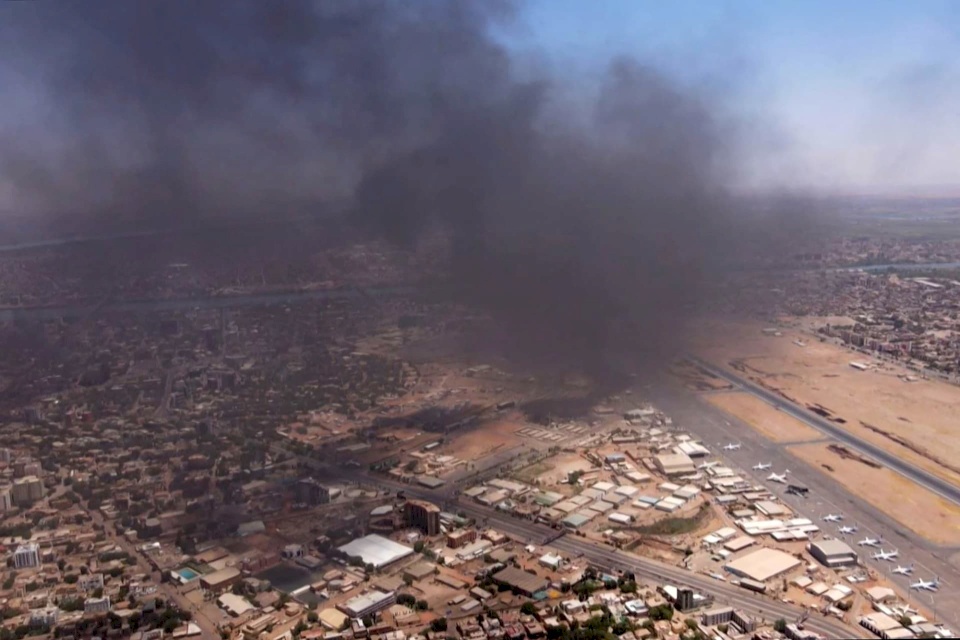
The Hill: These Initiatives are a Ray of Light in Sudan's Dark Night
SadaNews - As the horrors of war escalate in Sudan, the world's attention is focused on human brutality, but behind this bleak image shines a glimmer of humanity represented by thousands of Sudanese who rise, despite the heavy cost, to save their neighbors.
With this introduction, The Hill American site - in an article by Don Cheadle and John Prendergast - discussed a bright humanitarian aspect amidst the devastating war in Sudan, emphasizing that scenes of violence and widespread abuses do not negate the existence of Sudanese who are sacrificing their lives to save others.
The authors highlighted the example of Dr. Jamal Al-Tayeb, who continued working at "Al-Noor" hospital in Omdurman despite the collapse of the health system, lack of resources, and security risks, saving hundreds of lives under harsh conditions, which qualified him to receive the Aurora Prize for Awakening Humanity, honoring individuals who risk their lives to save others, in recognition of his steadfast commitment to serving the Sudanese people amidst the devastating war.
The article places this individual story in the context of a comprehensive humanitarian tragedy, as Sudan faces the largest displacement crisis and the largest recorded humanitarian disaster, with tens of millions in need of assistance and millions left homeless.
The authors also shed light on the vital role played by "Emergency Response Rooms" established by local communities, mostly led by women, to provide food, medicine, and evacuate the most vulnerable groups, amidst the conflict parties' prevention of access to international organizations.
The article warns that these grassroots initiatives, despite being nominated for the Nobel Peace Prize and their high effectiveness, are now at risk of collapse due to lack of funding and declining international support, especially after the suspension of contributions from the United States Agency for International Development.
One volunteer in an emergency response room near Dr. Al-Tayeb's hospital said that food sometimes runs out before serving everyone waiting in line, lamenting that he recently had to inform a mother that there was nothing left for her two children.
He added, "I returned home and couldn't speak to my family that night. The feeling of shame was heavy on me because I had food in my stomach while the children got nothing."
The authors assert that the resilience of Sudanese people and their determination for dignity and peace represent a true source of hope, and they called on the international community to support these humanitarian efforts and pressure external parties that fuel the conflict.
Source: Hill
 Follow the latest Sada News via Google News
Earthquake of 5.5 Magnitude Hits Western Iran

To Enhance His Support for "Increasing Children"... Vance Announces the Birth of His Fourt...

Death of a Mosque Imam in Armed Attack in Southeastern Iran

Rubio Reveals Circumstances Surrounding the Death of an American Soldier in Iraq

Reliable Threat.. US Embassy in Jordan: Evacuation of International Airport and Port in Aq...

Italy Raises Alert Level to 'Red' with Deadly Heat Wave

Kuwaiti Army Intercepts Iranian Missile and Drone Attacks
