
Tulkarm: A "Cowardly Capital" Loses the Governorate Projects Worth Approximately One Billion Dollars
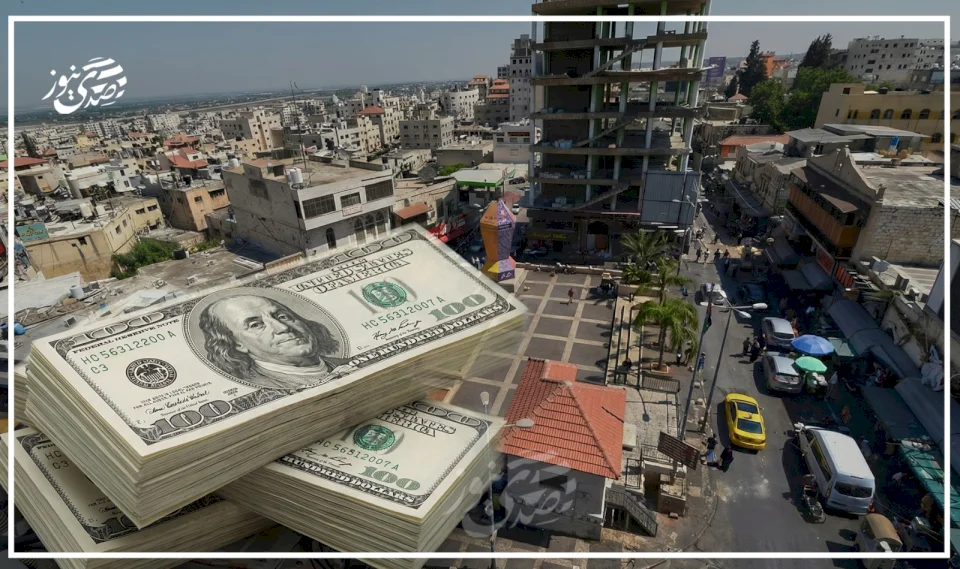
Exclusive to SadaNews: Banking figures indicate that the total bank deposits in Tulkarm Governorate reached approximately 792 million dollars by the end of the second quarter of the current year (2025), placing it sixth among the West Bank governorates in terms of deposit volume. Ramallah and Al-Bireh took the lion's share with deposits amounting to about 6.73 billion dollars, which represents 41% of the total deposits in the West Bank. Following them were Nablus with deposits valued at 2.61 billion dollars, Hebron with 1.73 billion dollars, Bethlehem with 1.42 billion dollars, and Jenin with deposits amounting to 1.15 billion dollars.
Tulkarm accounted for nearly 4.4% of the total deposits in the West Bank, while the Governorate’s population of 200,000 people represents about 5.88% of the total population of the West Bank. However, if we exclude Ramallah and Al-Bireh, which constitutes about 41% of the total deposits and whose position as the top region for deposits is attributed to being the primary center for both the public and private sectors—with many institutions registering their deposits there—then Tulkarm’s share of deposits would rise to about 7.5% of the total deposits. In contrast, Hebron, which is a significant economic and commercial hub in the largest governorate by population, contributes about 10.54% of the total deposits, while its population represents around 23% of the total population of the West Bank.
While observers confirm that bank deposits, in this context, do not necessarily reflect the economic strength of each governorate, there are cultural reasons preventing some social segments from depositing their money in banks, particularly in Hebron, which likely has the strongest economic power in the West Bank. Nevertheless, these figures affirm that there are lost investment opportunities in Tulkarm Governorate. Considering that there is money being kept outside the banking sector with money changers and others, the governorate effectively possesses about one billion dollars, which represents lost opportunities as it lies outside the investment framework that could change the governorate's developmental and urban reality and contribute to extensive employment operations that would mitigate the unemployment problem and aid in the growth of the gross domestic product.
Salim Maari, a businessman and the Secretary of the Chamber of Commerce, Industry, and Agriculture in Tulkarm, tells "SadaNews" that the governorate possesses several investment advantages in areas such as tourism, agriculture, and industry. However, under the current security and political conditions facing the governorate, no businessman, trader, or investor has the courage to start a project or enter into new investments.
He states, "The last three years, marked by incursions and the destruction of infrastructure by the occupation, have been sufficient to drive traders and businessmen to seek their interests outside the governorate for reasons related to the security and political reality, resulting in the destruction of infrastructure, closure of gates and crossings, establishment of barriers, and creating a pressuring environment on the governorate and its residents, leading to the imposition of a new reality that makes traveling to Tulkarm a strenuous journey requiring hours."
Maari points out that "capital" is generally known to be "cowardly" and does not venture into investments except in a stable environment. However, the current conditions push those who possess money to prefer depositing their funds in banks, awaiting upcoming investment opportunities if the appropriate environment becomes available.
He notes that Tulkarm Governorate has recently been known for having tourism and industrial facilities, successfully attracting visitors from outside the governorate, whether from nearby cities and villages in the West Bank or from residents of the 1948 areas, who used to visit the governorate for tourism and to stock up on their needs. However, the decline in commercial and tourism activity has been noticeable due to the current conditions.
Maari admits that Tulkarm Governorate has several investment advantages, as there are cultivated and uncultivated lands that allow for urban expansion, which has been witnessed through significant growth in the real estate sector in recent years. Additionally, there is potential for agricultural investments, indicated by the spread of plastic greenhouses for agriculture after Israel closed the door on workers returning to the Green Line, pushing them to search for alternative opportunities, and there is also the potential for investment in the industrial sector, especially since Tulkarm is famous for having about 11 stone crushers, suggesting potential for developing the stone and construction sector.
He adds, "There has been significant urban and demographic expansion in Tulkarm in recent years, and there are ways to exploit the investment opportunities available in a manner that contributes to the developmental process. However, the current conditions created by the occupation through its efforts to suppress the Palestinian presence are the biggest constraints on any developmental operations."
 Follow the latest Sada News via Google News
Civil Defense in Gaza Begins Recovering Bodies Amid Severe Equipment Shortage

Jerusalem Governorate Warns of Colonial Plan to Separate Northern Jerusalem

Occupation Notifies to Halt Construction of House Northeast of Bethlehem

Pro-Israel.. Far-right Candidate Wins Presidency of Chile

Tulkarm: A "Cowardly Capital" Loses the Governorate Projects Worth Approximately One Billi...

Israel Decides to Extend Banking Relations with Palestinian Banks for Two Months

Race for Influence in Gaza Reconstruction: American Companies and Officials Compete for Bi...
