

UNRWA Warns: Aerial Aid to Gaza is Insufficient and the Solution Lies in a Broad Flow of Assistance
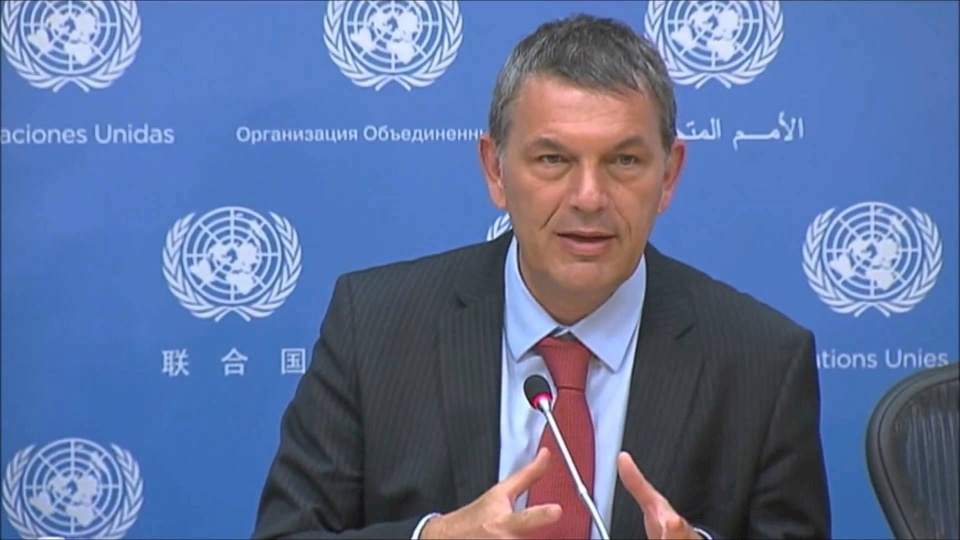
SadaNews - The Commissioner-General of the United Nations Relief and Works Agency for Palestine Refugees (UNRWA), Philippe Lazzarini, said today, Friday, that the aerial drop of aid to Gaza is "insufficient," costing at least 100 times more compared to overland shipment.
In a post on the "X" platform, Lazzarini noted that "aerial drops are more expensive, costing at least 100 times more than sending aid through trucks, which carry double the amount of supplies transported by aircraft."
He added: "If there is the political will to allow aerial drops of aid, despite their exorbitant cost and inadequacy, the same will should exist to open the land crossings."
This comes as the Israeli army announced on Saturday its "permission" for limited quantities of aid to be dropped on Gaza.
This Israeli step coincides with the rising regional and international pressures due to the worsening famine in the sector, with warnings of a collective death risk threatening more than 100,000 children in the sector.
The UN official confirmed that "the only way to combat famine in Gaza is to flood the sector with aid," pointing out that UNRWA has about 6,000 trucks loaded with aid waiting outside the sector for permission to enter.
Lazzarini mentioned that during the previous ceasefire on January 19 of last year, which lasted about three months, the UN, including UNRWA and its partners, was able to enter between 500 and 600 trucks daily, reaching all citizens in Gaza "safely and with dignity," helping to curb the worsening hunger without any reported theft or redirection of aid.
According to the latest data from the Ministry of Health in Gaza, the number of deaths due to famine and malnutrition reached 154 Palestinians, including 89 children, since the beginning of the war.
Lazzarini emphasized that "the coordination led by the UN, with UNRWA as its backbone, has no alternative, as no other mechanism has achieved similar results."
He said: "Let us return to what has succeeded, let us do our job, this is what the people of Gaza need today more than ever, alongside a permanent ceasefire."
Away from the supervision of the UN and international relief organizations, Tel Aviv has been implementing a plan to distribute aid since May 27 through what is known as the "Gaza Humanitarian Relief Foundation," a body supported by Israeli and American funding but rejected by the UN.
Since the beginning of this mechanism until Friday, 1,383 martyrs and more than 9,000 injured have reached Gaza's hospitals due to the Israeli army shooting at those waiting for aid, according to the Ministry of Health.
The war on Gaza has left about 208,000 people among martyrs and injured, most of whom are children and women, with more than 9,000 missing, in addition to hundreds of thousands of displaced people and famine that has claimed many lives.
 Follow the latest Sada News via Google News
Washington Investigates Possible Russian Role in Iranian Attacks on Its Sites

Mossad Chief Visited Washington to Discuss Iran and Its Nuclear Program

Report: Washington Informed Israel It Is Preparing to Intensify Attacks on Iran and Use St...

Organization of Islamic Cooperation Condemns Nauru's Decision to Open an Embassy in Occupi...

Video:: Nablus: Settlers Evict Tubasi Family from Their Home in Jaloud and Take Over It

Netanyahu: I Intend to Form a Broad National Unity Government

Syrian Foreign Minister Meets with Yasser Abbas in Damascus
