

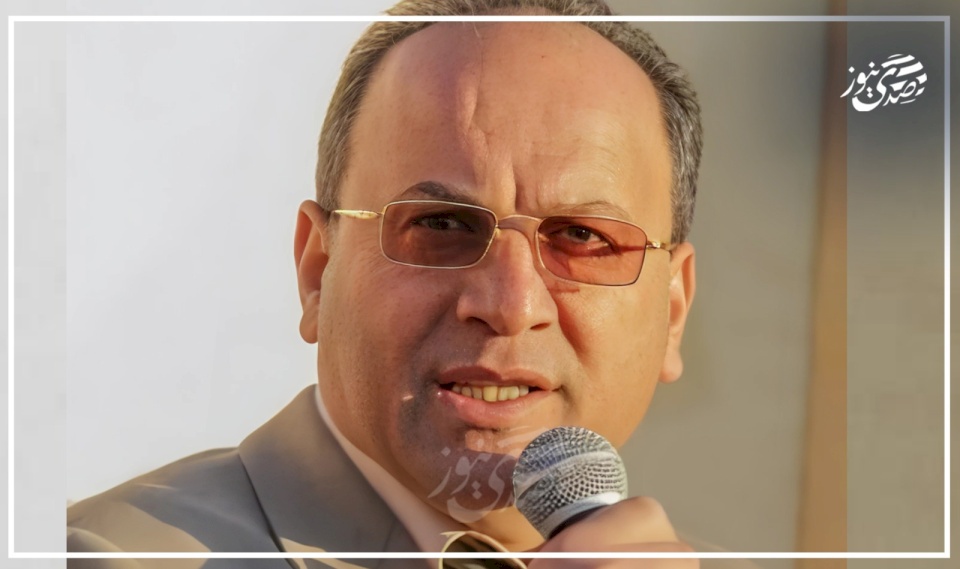
What Hossam Hassan Did… A Message Israel Must Hear Before It’s Too Late
When the head coach of the Egyptian national team, Hossam Hassan, dedicated the victory over Australia to the Palestinian people and to the victims of the war in Gaza, he was not speaking merely as a football coach; he was expressing the feelings of a wide segment of Egyptians and a deep sense among many Arabs and Muslims that the Palestinian issue has not faded from their consciousness despite the passing decades.
This position reflects a growing global scene where the Palestinian cause has emerged from a narrow political framework to a broad presence in stadiums, universities, and streets across the United States, Europe, and the Arab world from Morocco, Algeria, Tunisia, and Jordan.
Solidarity is no longer just official positions; it has become a popular phenomenon extending from the stands of stadiums to student movements in American and British universities, reaching protests and gatherings in the streets of European and American cities in a clear expression of the widening global awareness of the Palestinian cause.
Some politicians in Israel may believe that war, massacres, genocide, displacement, and the killing of children and innocents can impose a new reality, and that the passage of time can weaken the Palestinian cause or erase it from the memories of peoples. However, reality and history dismiss this belief; issues related to land, identity, and rights do not end with military power alone but can become more entrenched the longer the conflict continues.
After many years of confrontations and after an enormous number of casualties and destruction in Gaza and the West Bank, and after decades of wars and massacres, the question remains: Has the Palestinian issue ended? Have the Palestinians abandoned their demands? Have Arabs and Muslims forgotten Jerusalem and Palestine? And have the peoples of the world remained indifferent to international and humanitarian law and their commitment to justice and human rights? The answer is definitely: no.
For hundreds of millions of Muslims, Jerusalem is not just a historical city, but it includes Al-Aqsa Mosque, the first Qibla and the third holiest site. Thus, for many Muslims, the Palestinian issue is not merely a political issue but also carries a religious, cultural, and humanitarian dimension that keeps it present in the collective consciousness from generation to generation.
It is also a mistake to think that the positions of Arab governments always reflect the positions of their peoples; presidents, kings, and Arab governments supported by America and Israel change, alliances shift, and international circumstances evolve, while peoples retain their memories and convictions for much longer. Therefore, understanding the region solely through the positions of its regimes may present an incomplete picture.
Additionally, the balance of power is not static. History has witnessed the rise of major powers only to see them decline, and alliances have changed numerous times. It is wise not to base long-term strategies on the assumption that the balance of power will remain forever in favor of America and Israel. We notice the movement of European populations and the rising global freedom fighters against Israel and its criminal practices.
Thus, the question that should be asked within Israel is not: How do we win the next war? But rather: How do we prevent there from being a next war at all?
True peace does not arise merely from a sense of military superiority but from recognizing that every people has rights, dignity, and a future. If Israelis want their children to grow up in safety and stability, it is also linked to creating a political horizon that gives Palestinians hope for a future based on freedom and dignity.
The best time to make peace is when political options are available, not after tragedies accumulate and the cost becomes greater for everyone. History teaches us that long conflicts ultimately end in settlements, but only after human and humanitarian losses that could have been avoided.
Hossam Hassan's position, in the eyes of many, serves as a reminder that Palestine is still present in the consciousness of peoples and that ignoring this reality will not eliminate it. If there is a lesson to be learned from decades of conflict, it is that lasting security is not achieved through force alone, but through justice, mutual recognition, and a settlement that preserves the dignity of both Palestinians and Israelis together.
Thus, just peace is not a gift offered by one party to another, but the only guarantee that children will not inherit their parents' conflicts, and that the future of the region will not remain a prisoner of an endless cycle of blood, fear, and hatred.
 Follow the latest Sada News via Google News
What Hossam Hassan Did… A Message Israel Must Hear Before It’s Too Late

Hosted by the Georgios Family..

Elections and the Priorities of the Palestinian People

After UNRWA... Are We Facing a Redefinition of the Palestinian Cause?

The Majesty of Death ...
105 Years of Achievement and Revival: The Communist Party of China and the Making of the C...

Between the Memory of the Revolution and the Trust of the State… Palestine Seeks Its Great...
